Urban Village
Workshop: ARCH 562 Propositions
Date: Winter 2019
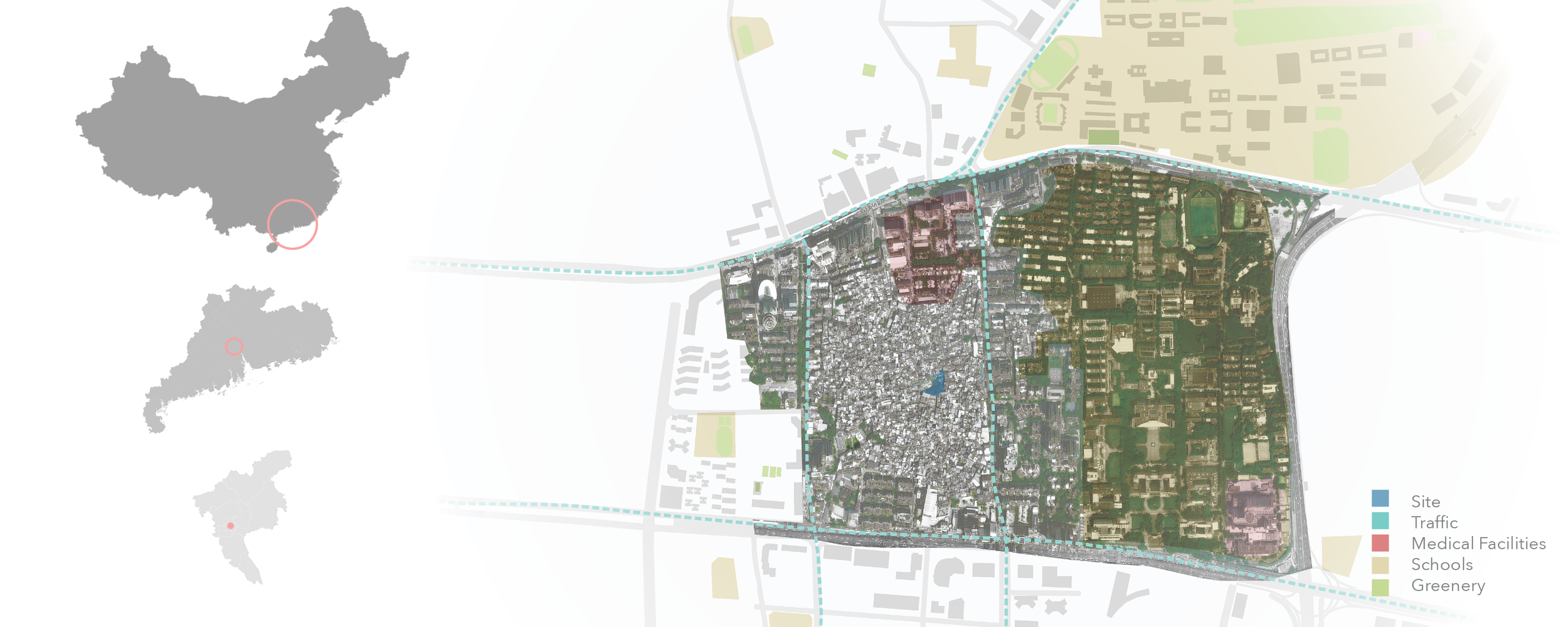
Although repetitive patterns of towers and slabs often perform well in achieving high floor-to-area ratios and population densities, they often lack the complex social and ec’ complex social and economic vitality. This project investigates alternative methods for preserving and enhancing the quality of life in the urban village. Urban villages are densely built neighborhoods located in the central zone of most major cities in China. They lack basic city planning and are occupied by migrants for affordability. The project will address the living conditions of Shipai Village. It’s one of the few existing urban villages in the central district of Guangzhou, China. Due to the rapid development in Guangzhou, the population is exploding as migrants seek new job opportunities. The urban village is a vibrant living mechanism that is a self-sustainable neighborhood. However, the absence of strategic urban planning has caused overcrowding and other social concerns.
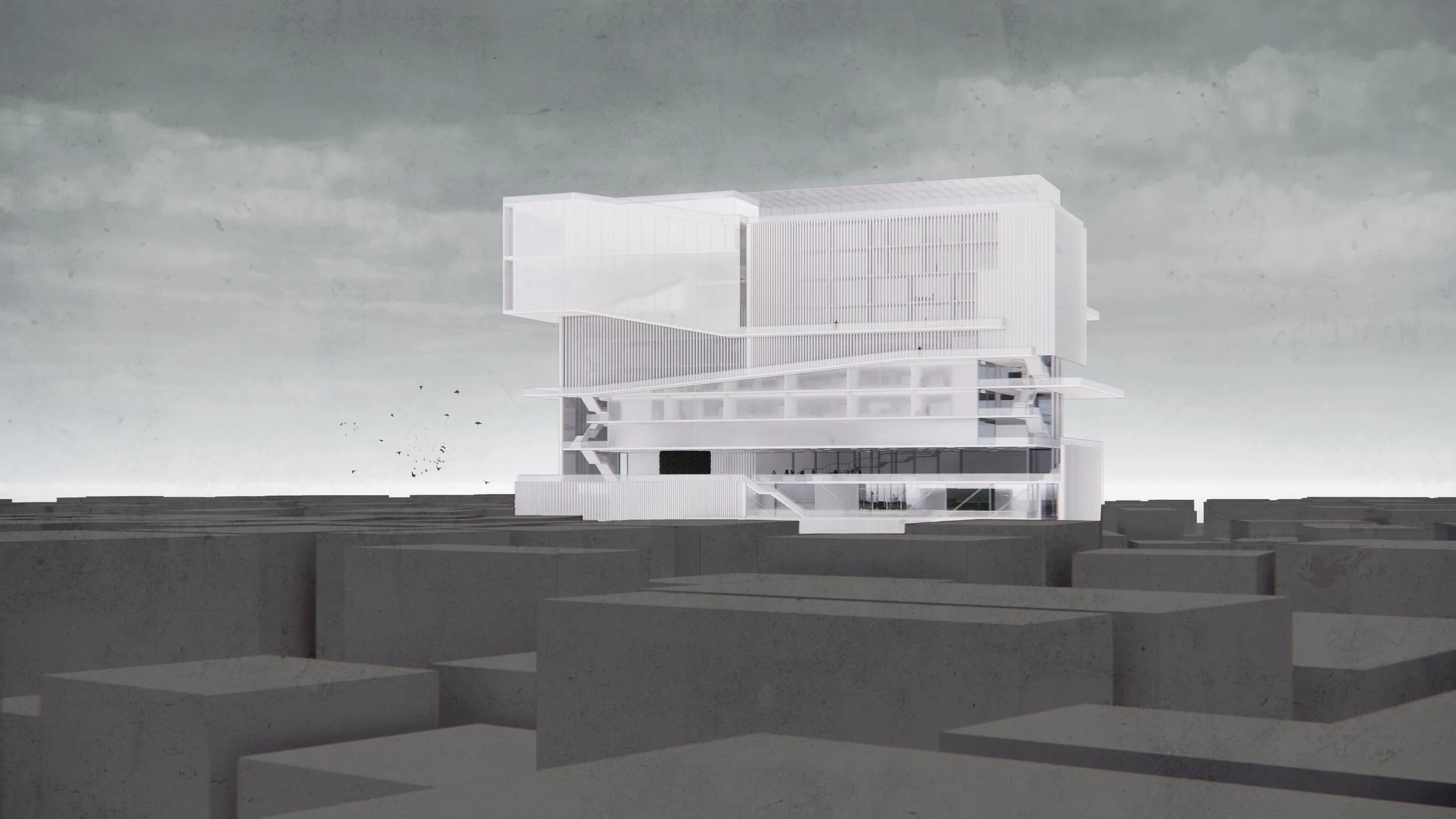
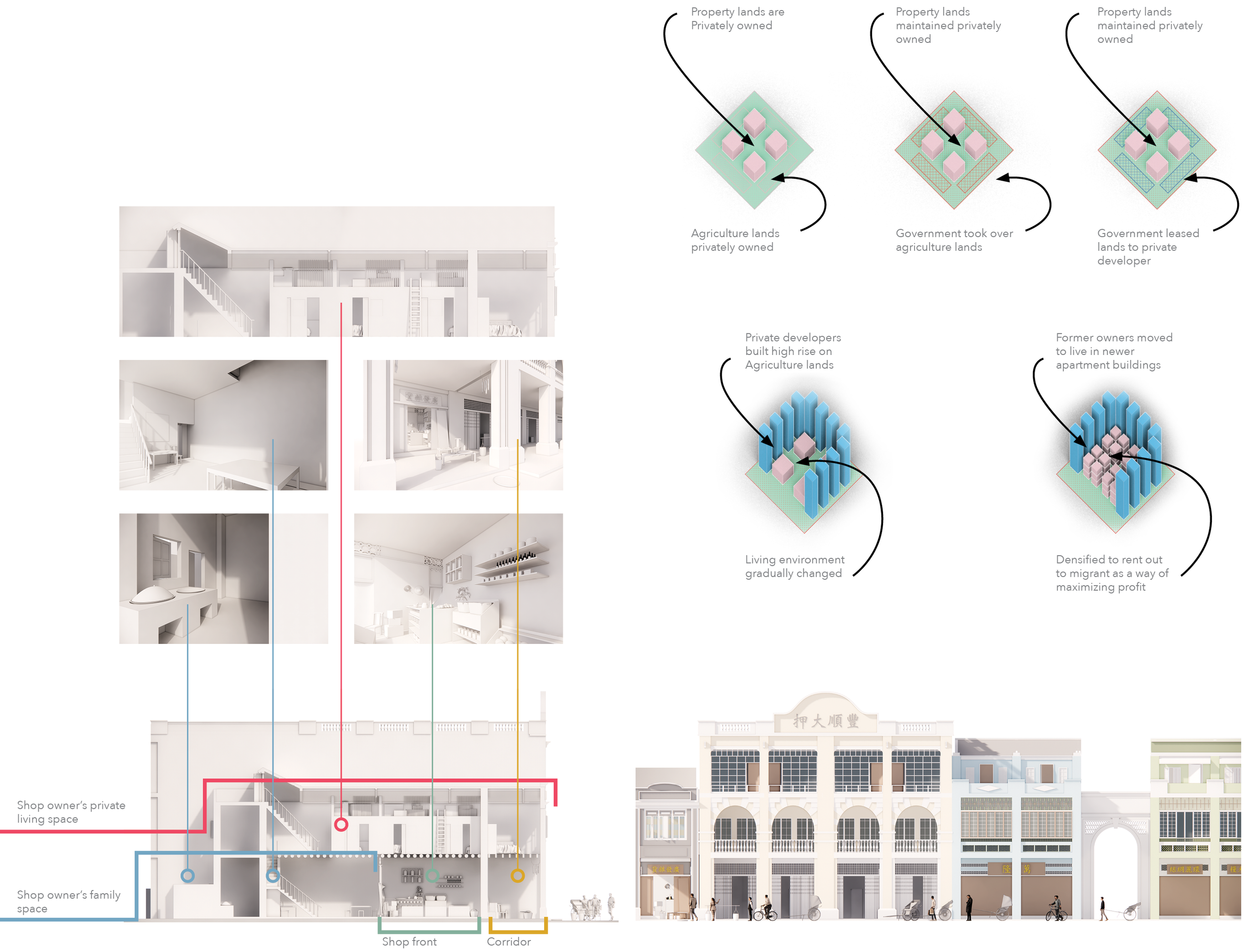
SHOPHOUSE CITY is interested in uncovering alternatives to the mono-functional design approach of the modernist city through research into hyper-dense urban conditions that evolved on small lot sizes of former vernacular building typologies. The site initially contains low-rise shophouses and detached single-family homes. Over the last decades, they underwent intense redevelopment and densification to address rapid population growth. These urban patterns offer an incredible diversity of building sizes and commercial activity that cater to various socio-economic groups today and serve as a testing ground to analyze urban configuration and social life relationships. The studio’s ambition is to gain knowledge for the practitioner to understand better what qualitative and quantitative aspects of their design are crucial to create intense, sustainable, and adaptable environments that are diverse, stimulating, and delightful.
1. Issue of Density
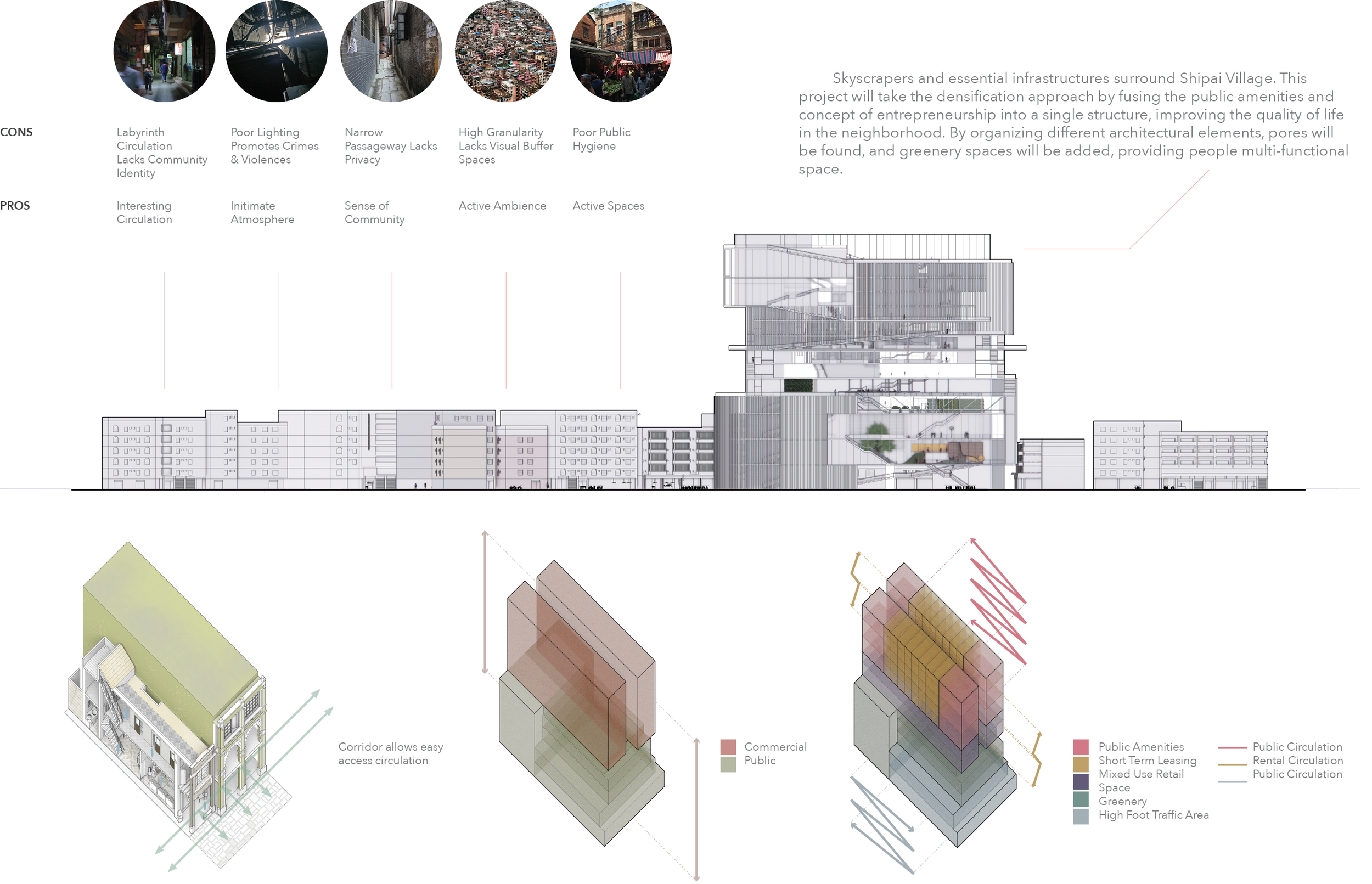
One of the critical issues of the urban village is the lack of orientation in the urban village, as individual landowners built it to accommodate more units for renting. The approach to this project is to help inspire creative solutions to crowdedness in the urban village. The proposed concept is to build higher with more permeability while maintaining a logical orientation for people to navigate around the area.
2. Greenery and Social and Mental Health
One of the drawbacks of an urban village is that it lacks planned city development, resulting in incredibly close buildings. Consequently, it created privacy issues, a lack of sufficient lighting, and poor air ventilation in the neighborhood. The project incorporated the concept of the hiking trail into the design to provide a viable solution. The design concept added the quality of greenery to provide a visual buffer zone to the surrounding. As a result, it’ll help enhance social interaction and add quality of life to the neighborhood.
3. Neighborhood Appearance
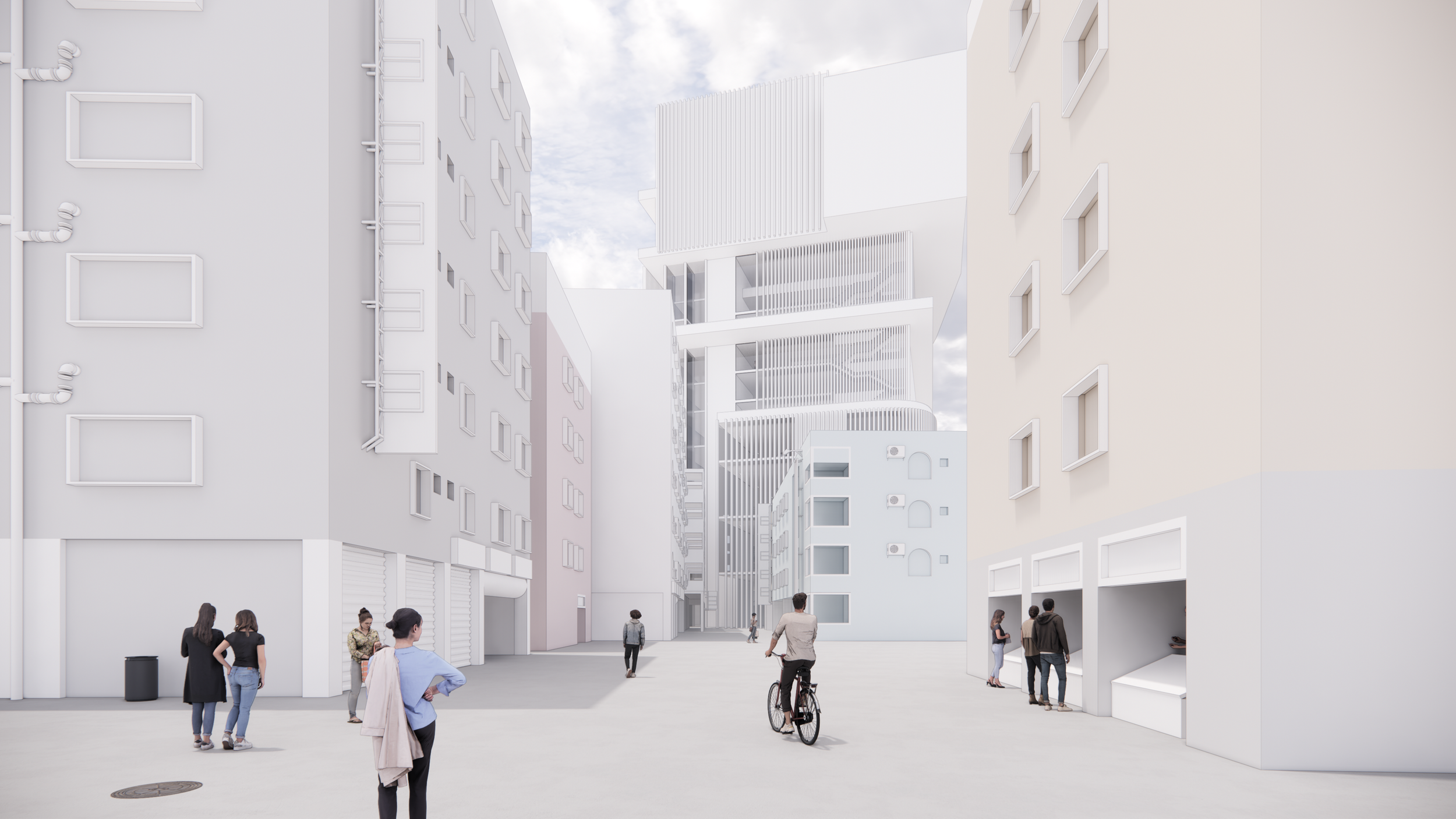
Based on the development history of the urban village, the dominant reason for the survival of the urban village was that it provides affordable housing to the general labor force to stay close to the central city perimeter. However, urban villages around China face a similar threat of being demolished to retrieve land for other development projects. The urban village units share the commonality of lacking a quality design space. To preserve the interesting dense urban village typology, adding design elements to the neighborhood created an opportunity and helped residents create awareness to design creativity for future city development.
4. Public Amenities
One of the issues that appeared in the urban village was that residents faced the lack of spaces to facilitate additional activities for leisure. The design added facilities to accommodate the different needs of different demographics to resolve this problem.
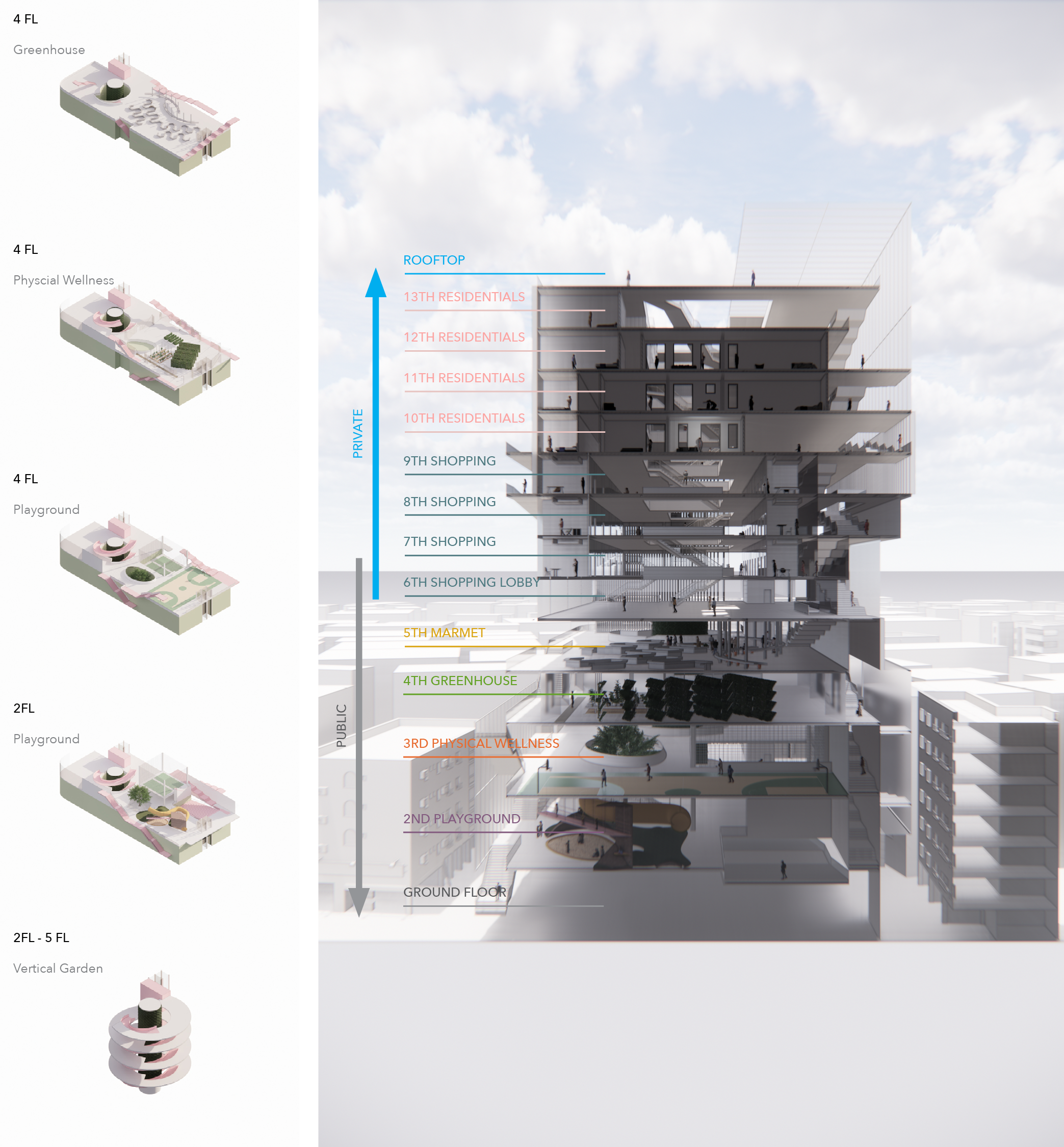
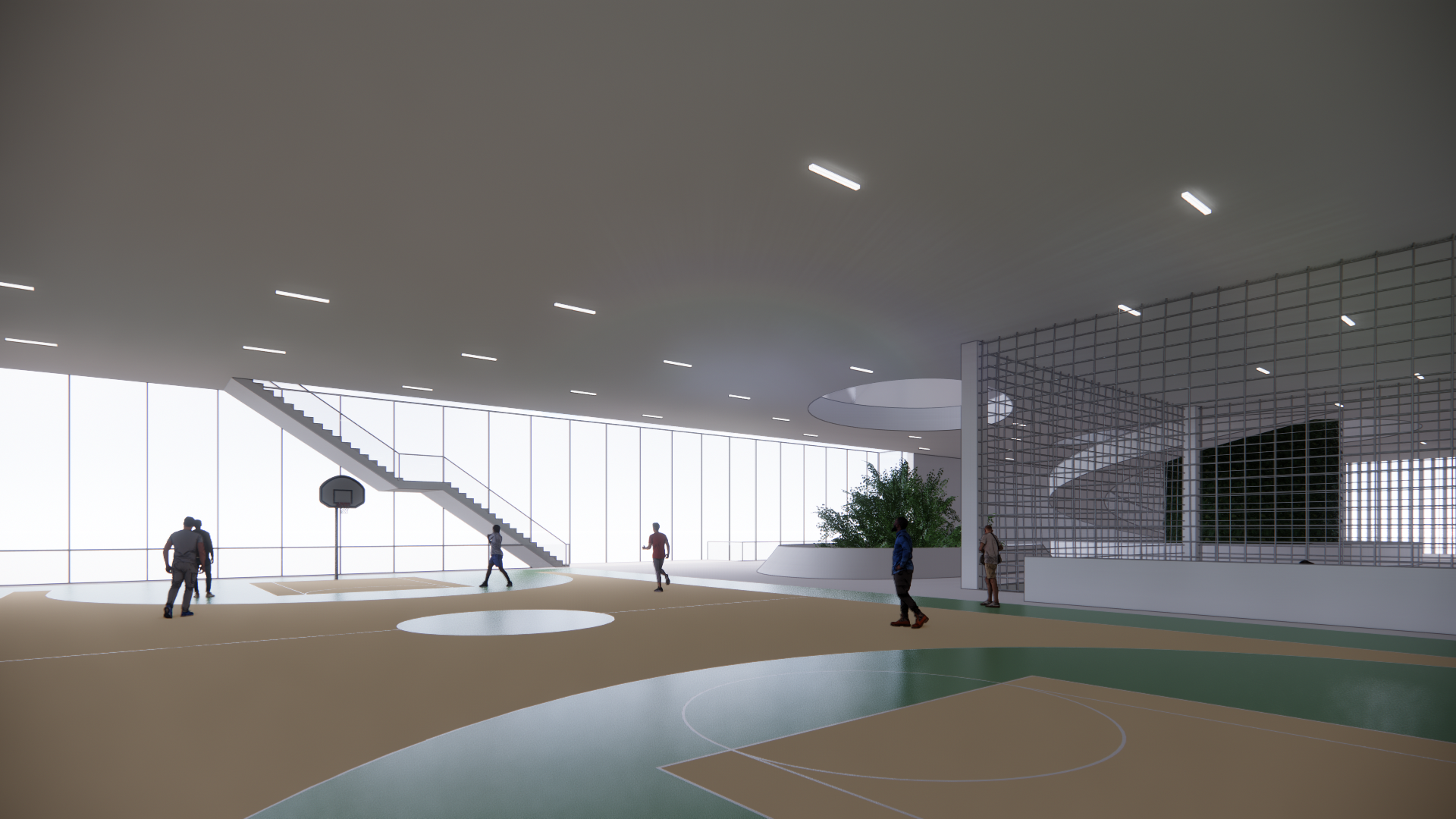
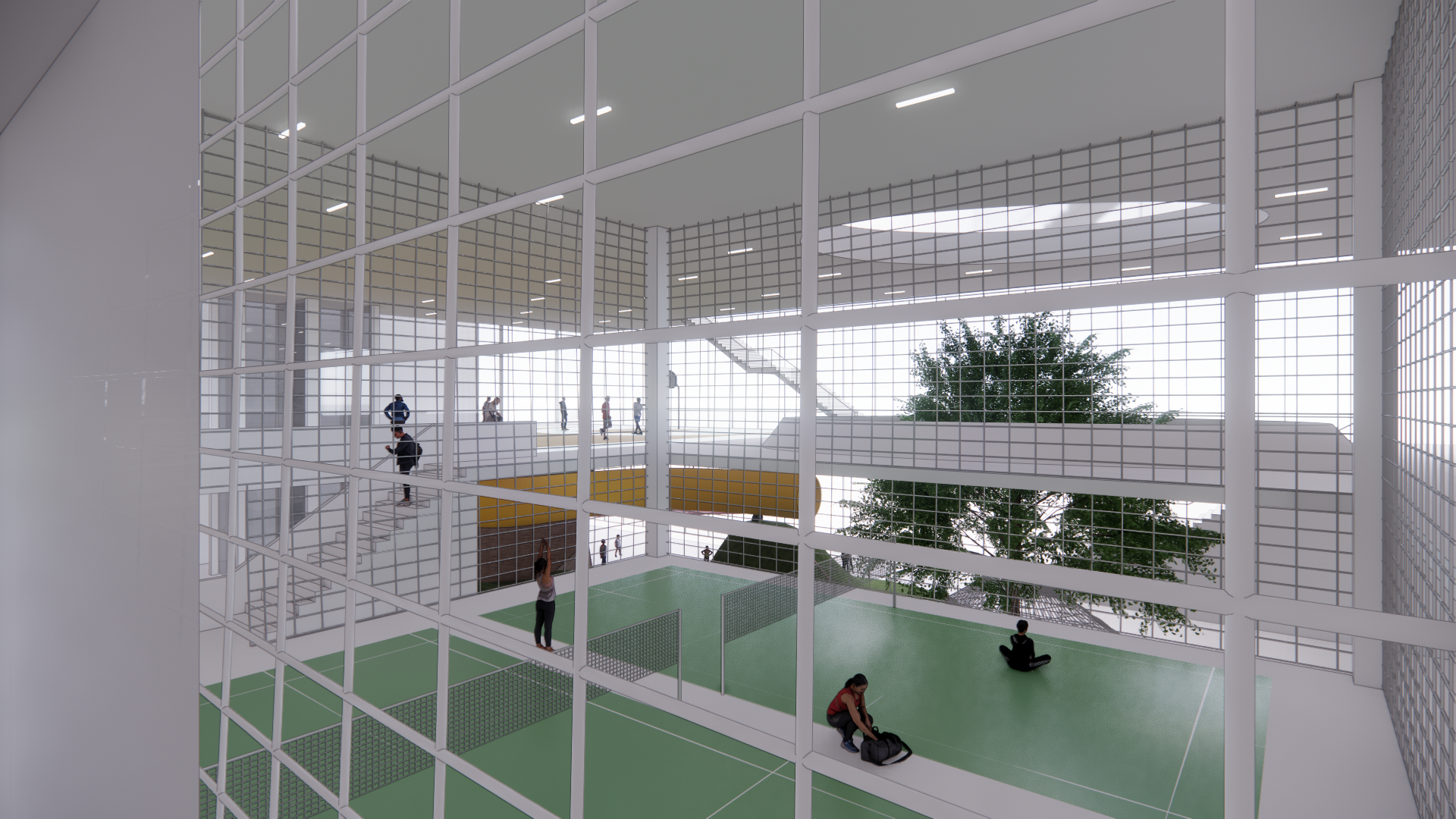
Basketball and badminton courts have been added to the building to promote physical health in the community. Basketball and Badminton are the two chosen sports because they require large open spaces for people to play them, which is challenging in the urban village. In addition, these two sports are widespread across the demographic of all ages in China, ensuring maximum use of the facilities. The floor plan will remain open at most for the benefit of transforming the location for other event usages.
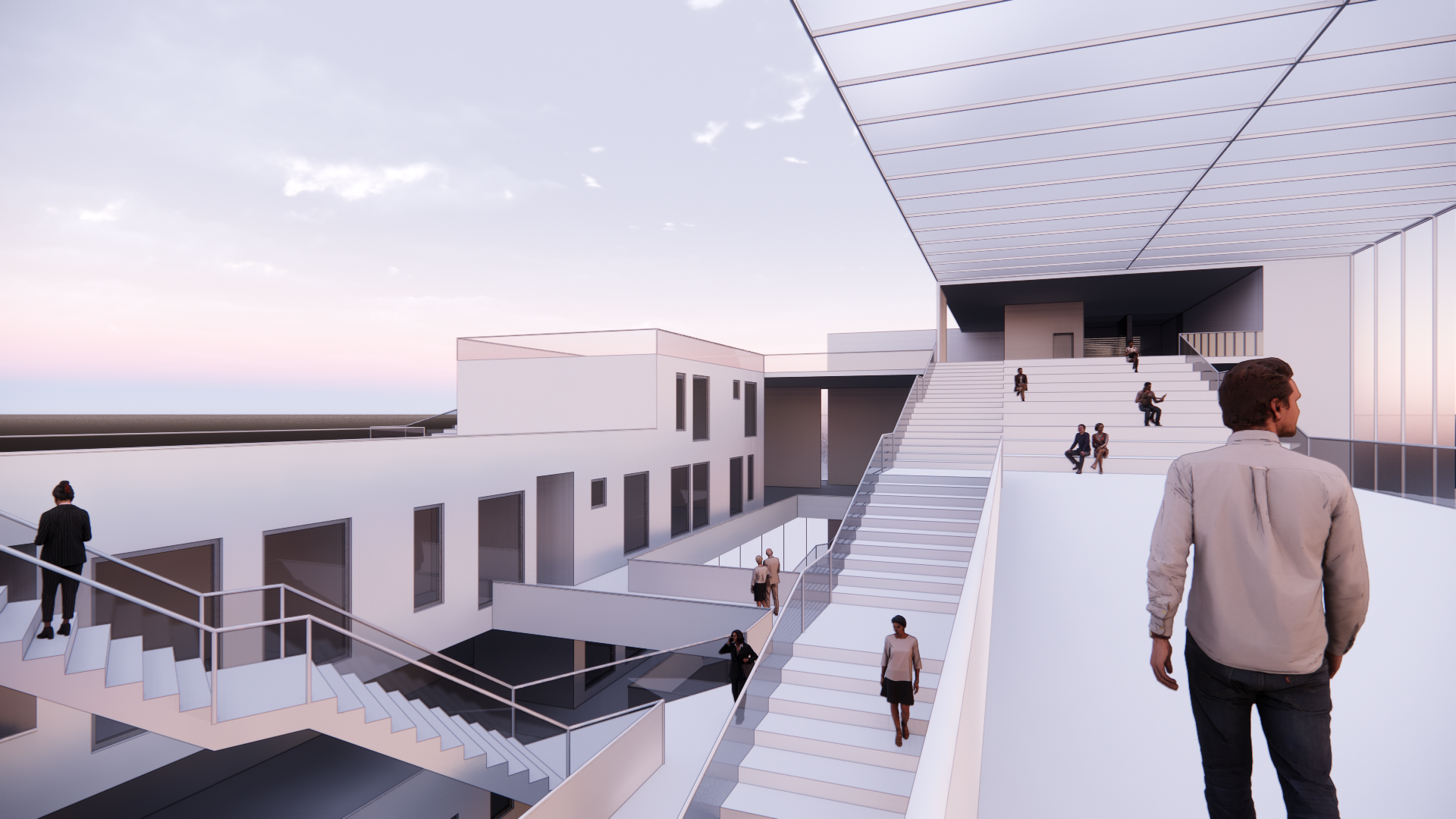
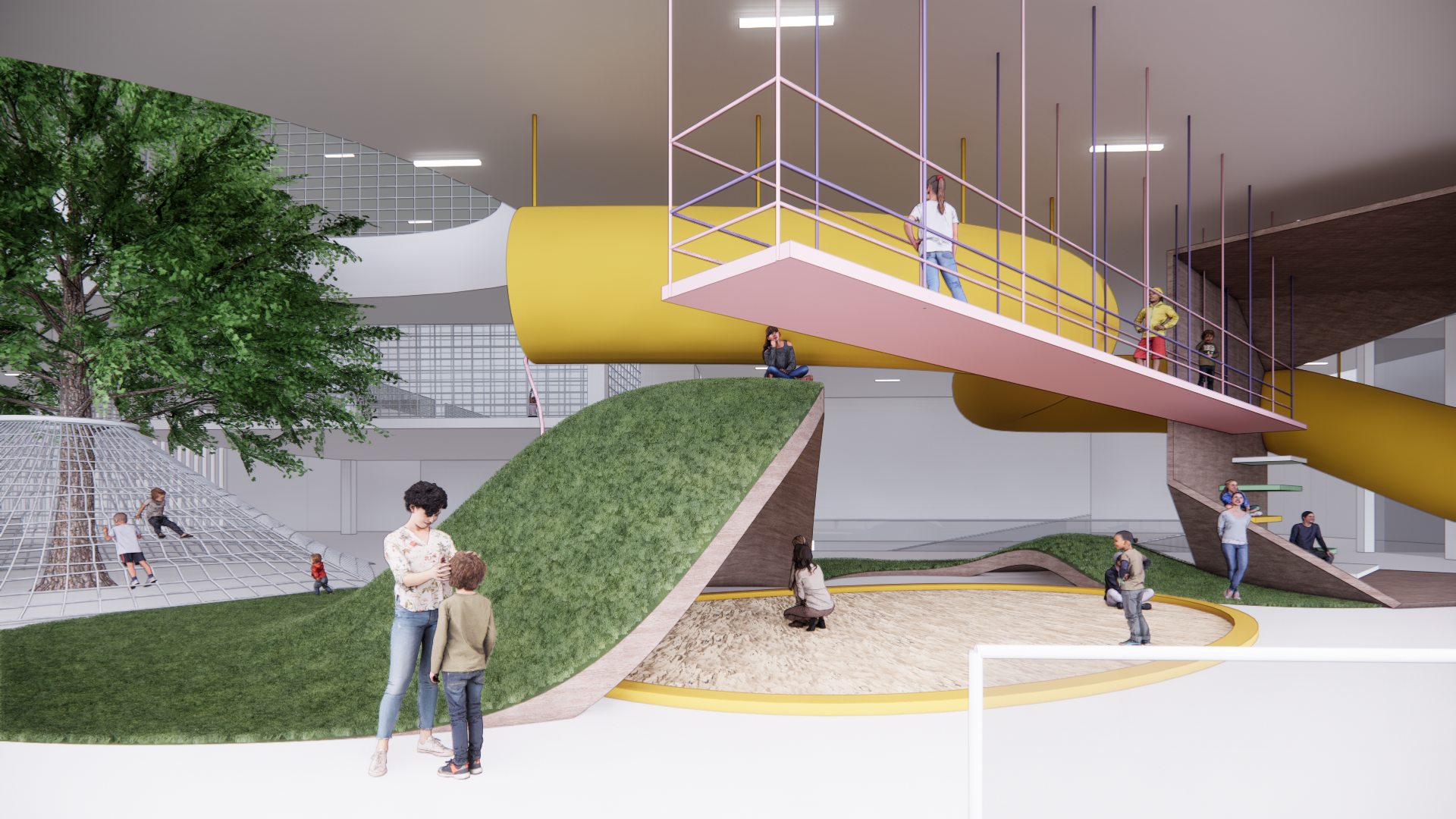
The children’s playground is on the 3rd floor. It includes various elements as a way to appeal to young children. This place aims to allow children to grow up in the urban village to run around freely, playing in a safe and open environment. The rooftop terrace is designed with a staircase bridging the lower floor to the upper floor. On the rooftop terrace, additional stair seating allows people to have extra space to hang out while looking out to the view of the urban village.
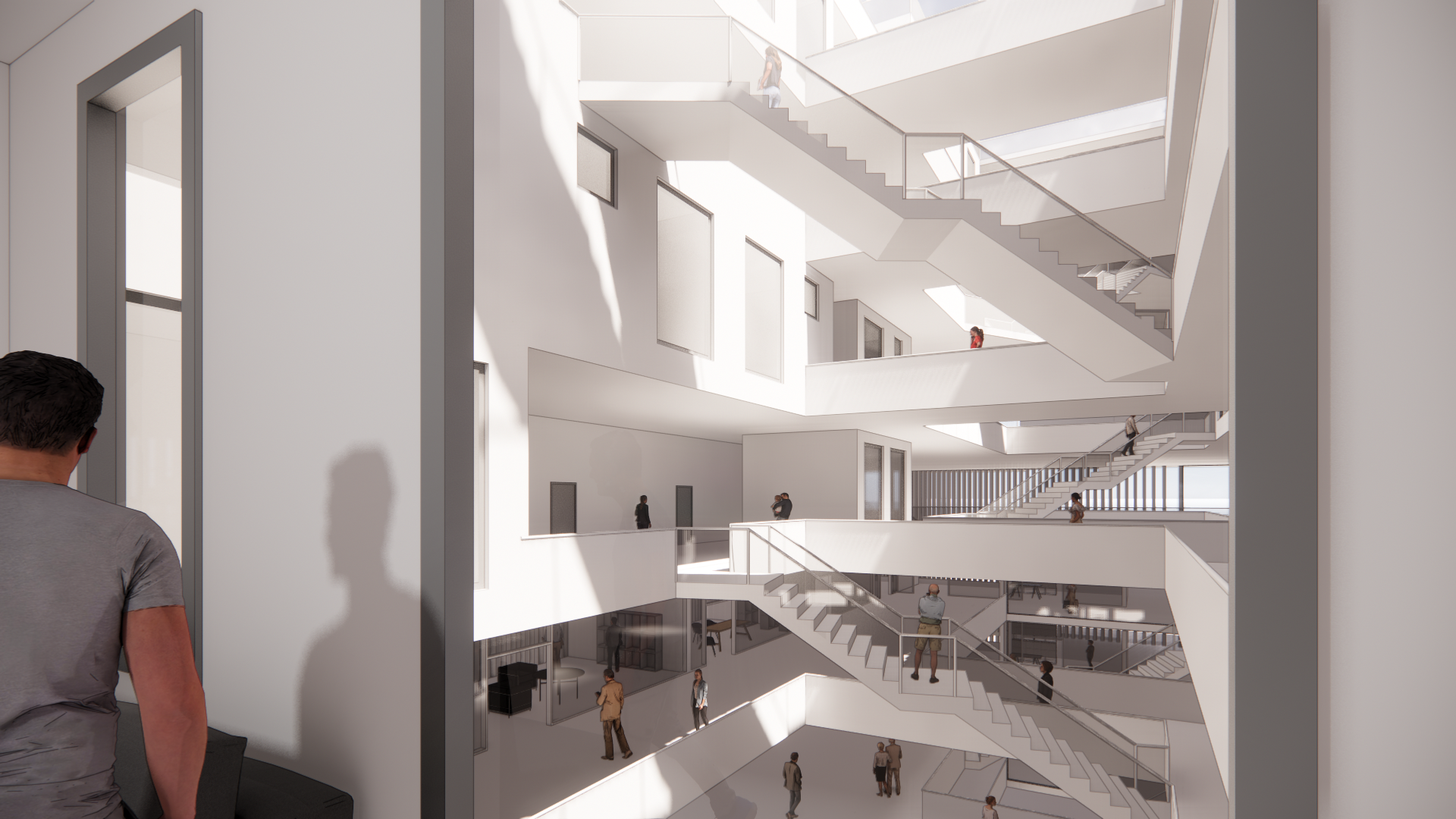
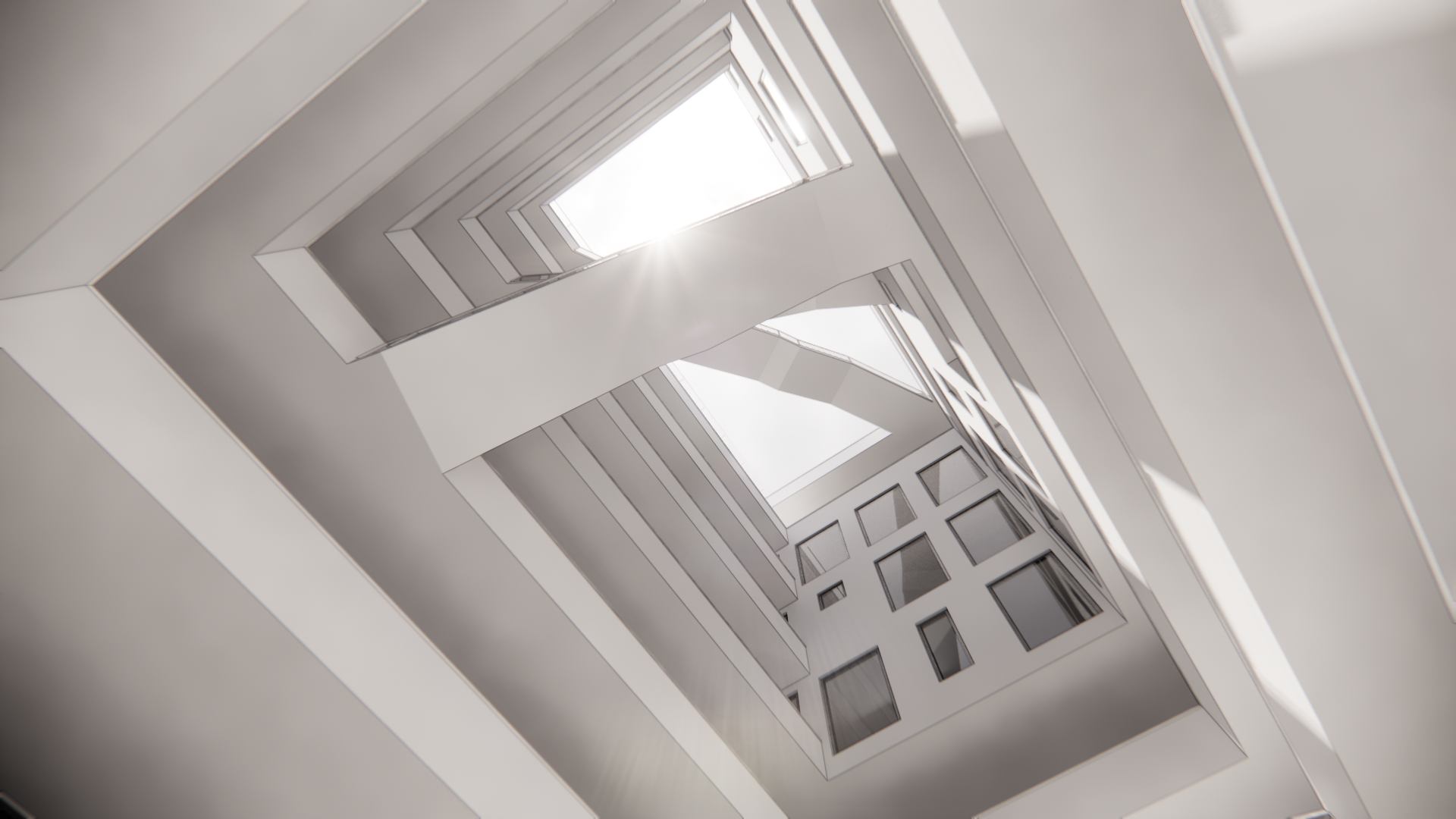
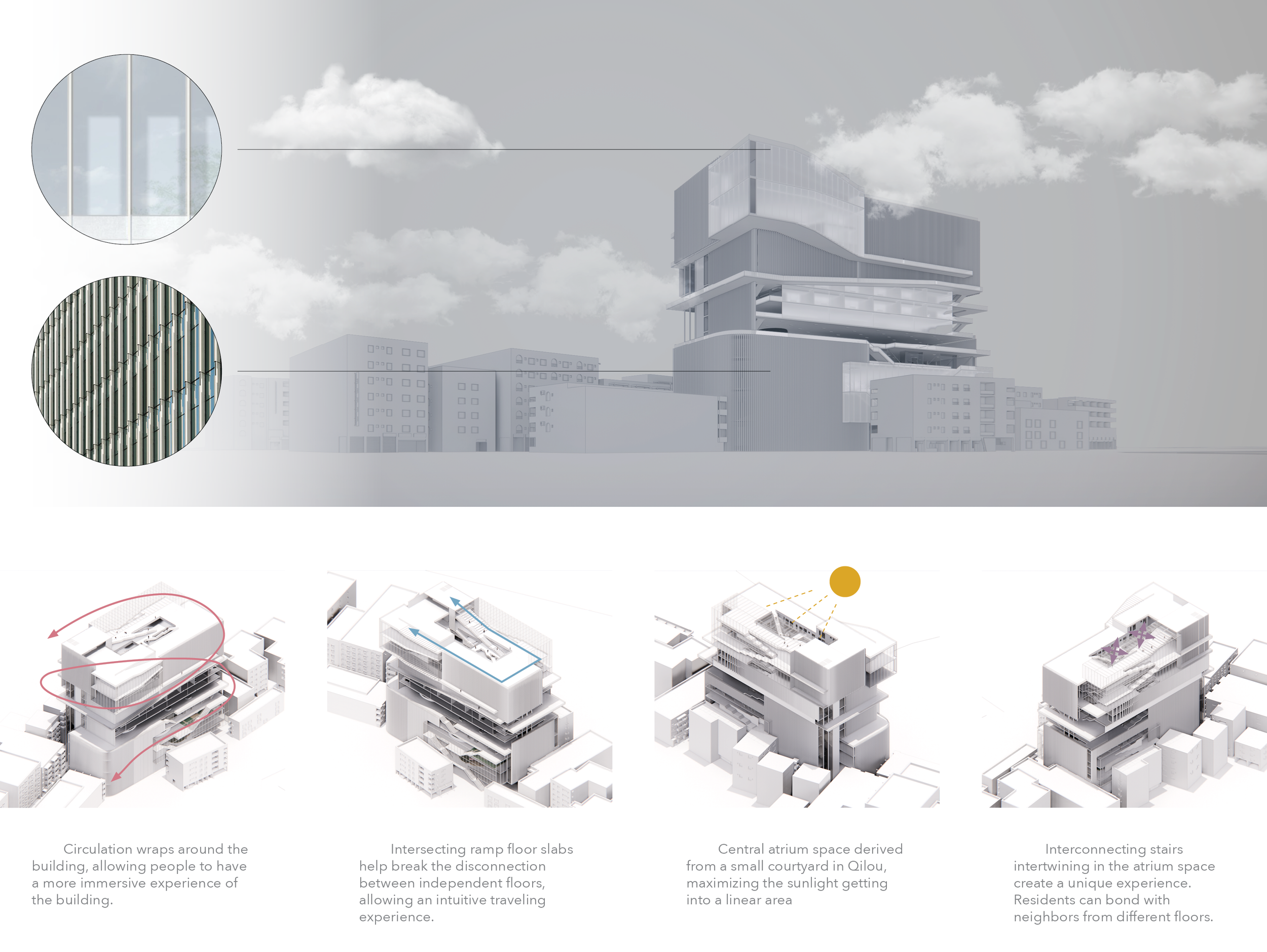
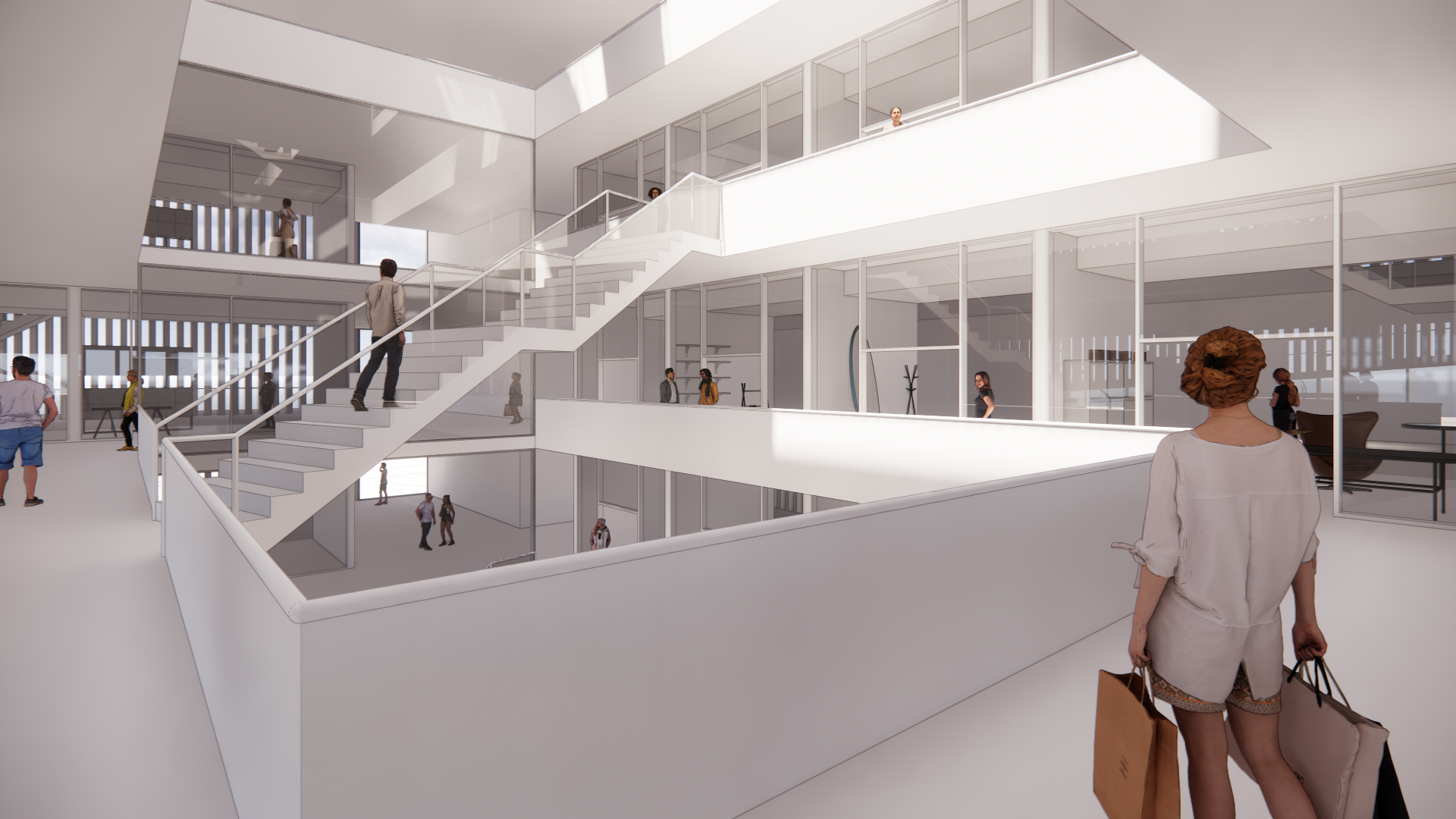
Central Atrium hosts rentals and retails. Rentals are put above retail to create the hierarchy of moving from public to intimate. Stairs are intertwined between different floors to allow efficient access to both sides, harmonizing the entire area. While people in the retail spaces can have the unique experience of traveling through the building, residents of the rental space will have to interact with others without the constraint of independent floors.
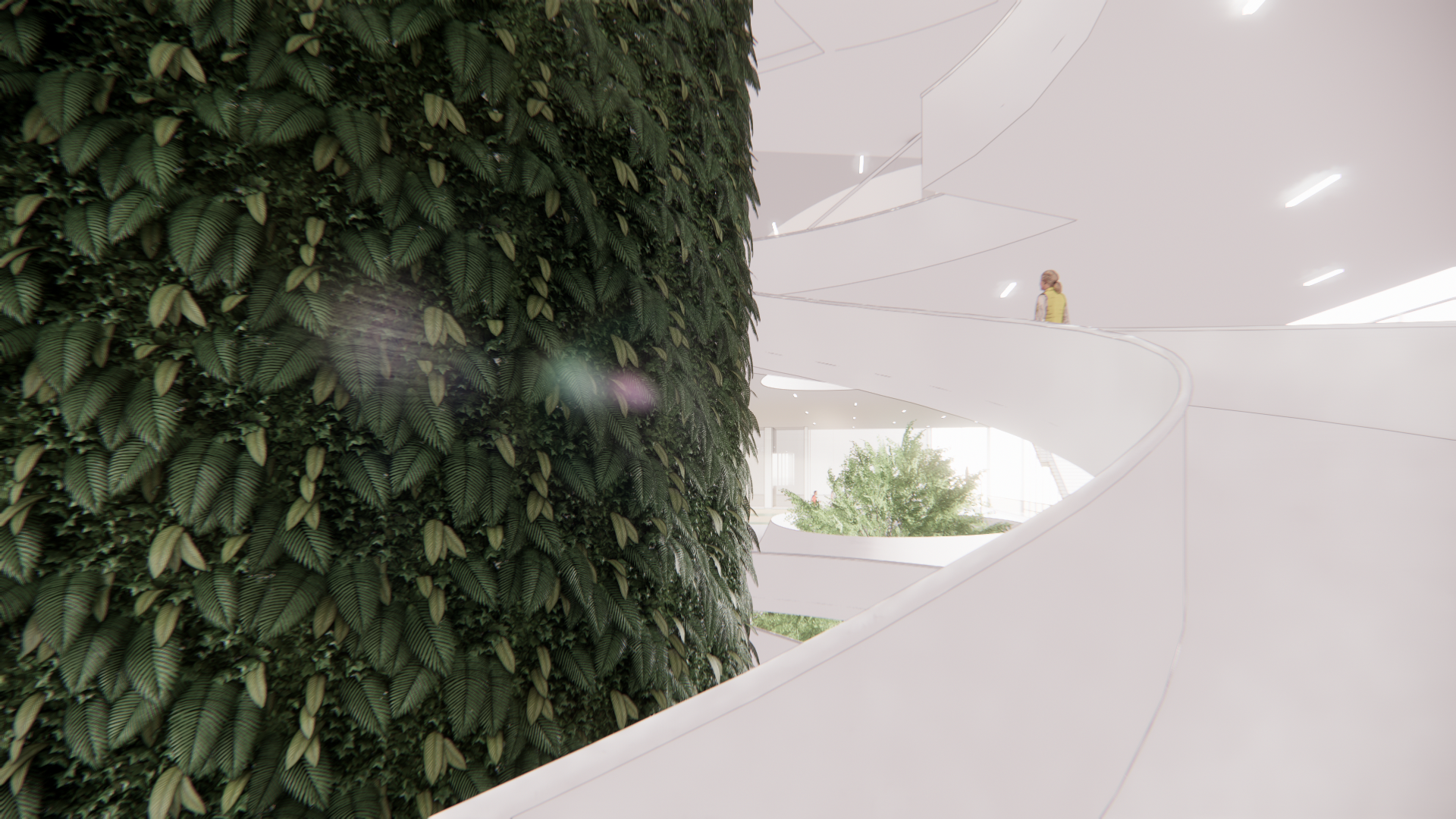
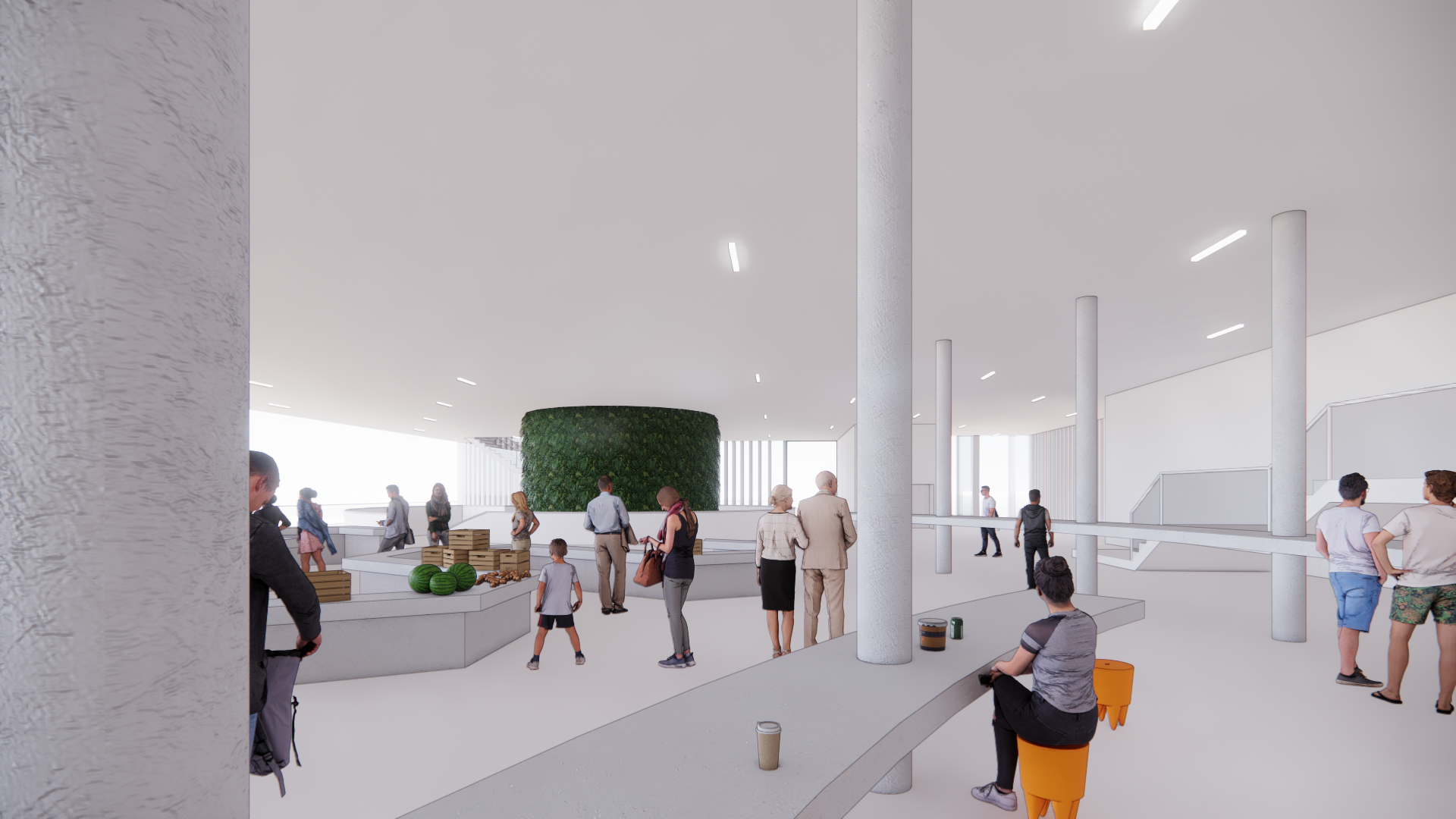
The circular vertical garden serves an observation purpose, located on the north end of the building. It runs from ground level to level 4, which holds the marketplace. While in the vertical garden, people can slowly move up the spiral ramps to reach a different destination in the building and enjoy the greenery simultaneously. People will arrive at Level 4, which holds a marketplace to the end of the spiral ramp. Stalls are ready at the spot, allowing people to place their items for sale. The additional space as the marketplace populates more foot traffic to the upper building and provides people with no venture capital to start their own business at a minimum cost.