Jersey City
City Hall
Project Type: Studio
Workshop: ARCH 552 Institution
Date: Fall 2018
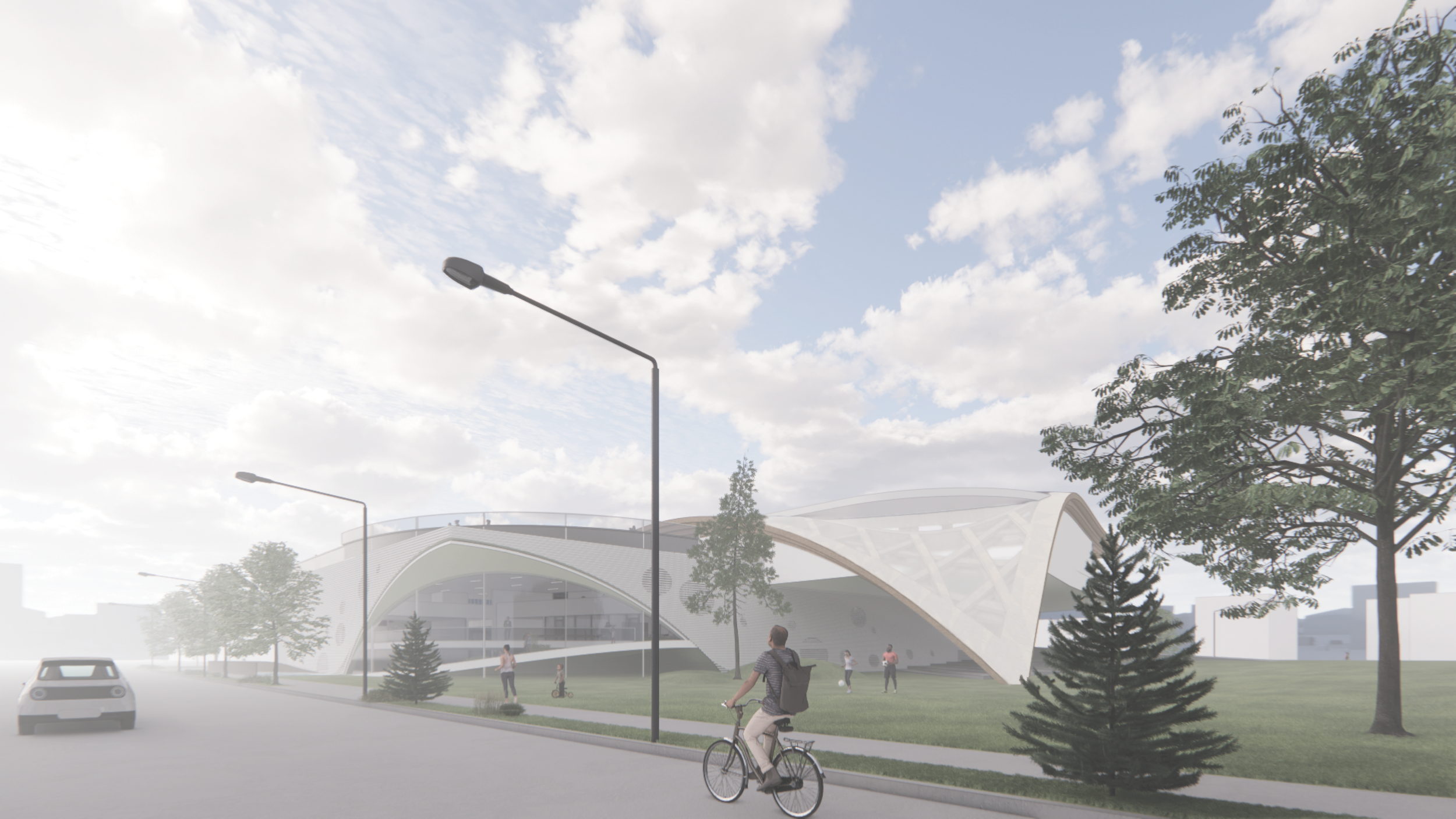
Locate in the heart of Jersey City, NJ, the new. City Hall aims to establish a new identity for the government buildings with the consideration of Jersey City as a mixed-demographic community, the diverse cultures require a comprehensive analysis to negotiate and organize the program. The city government is facing the issue of underutilized institutional space. Few people choose to visit city halls due to the migration of public services to the Internet. Moreover, many immigrants residing in the neighborhood indicate a communication gap between the city and the residents. Additionally, the site’s location is prone to potential flooding as the geographic location is below the water level. The architectural approach includes identifying necessary programs and implementing an additional program that invites activities to happen in site design that is coherent with the massing strategy. This project aims to encourage public engagement and physically and visually connected elements to address the building in anticipation of continued changes in the demographics of the citizens it represents.
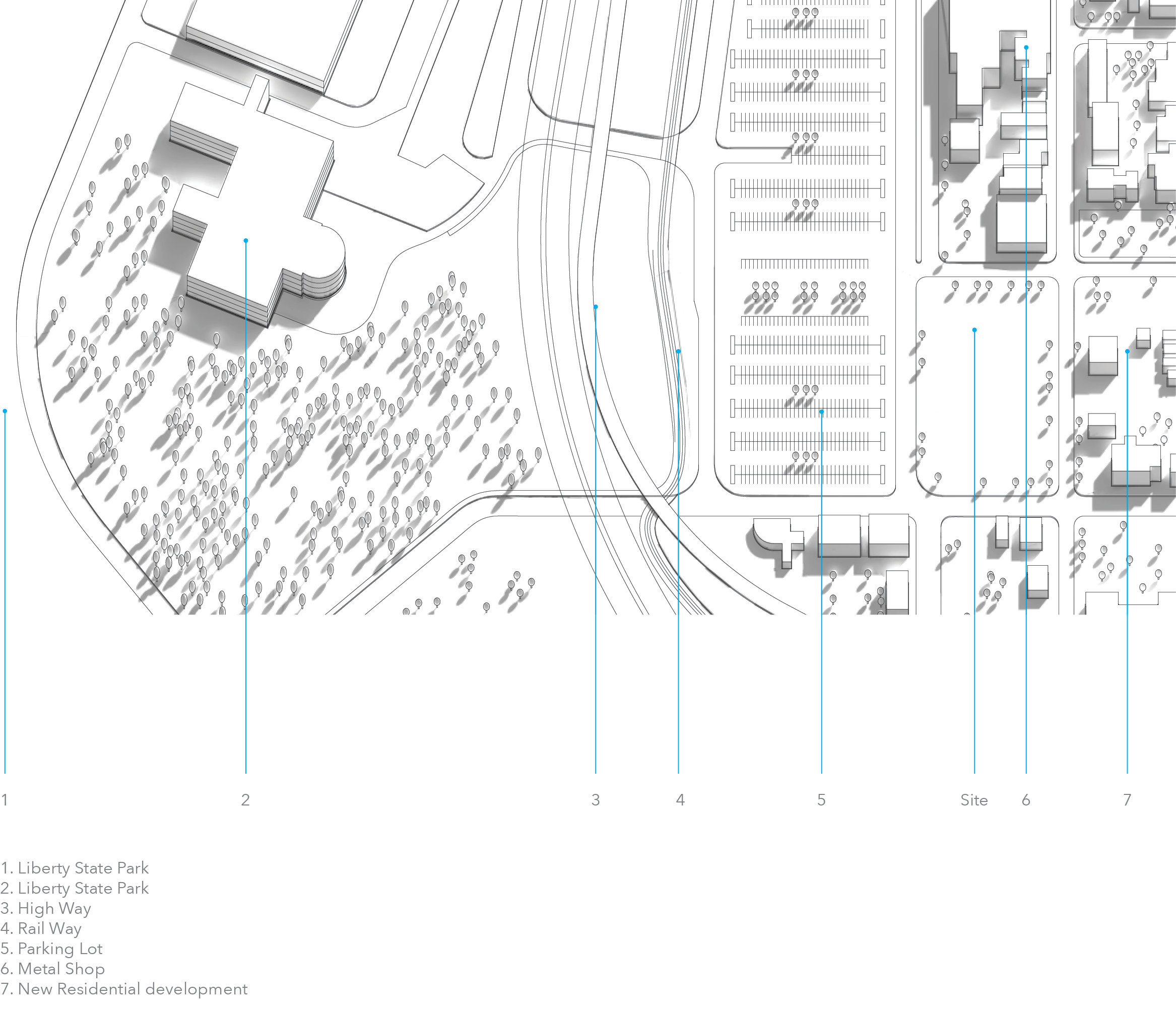
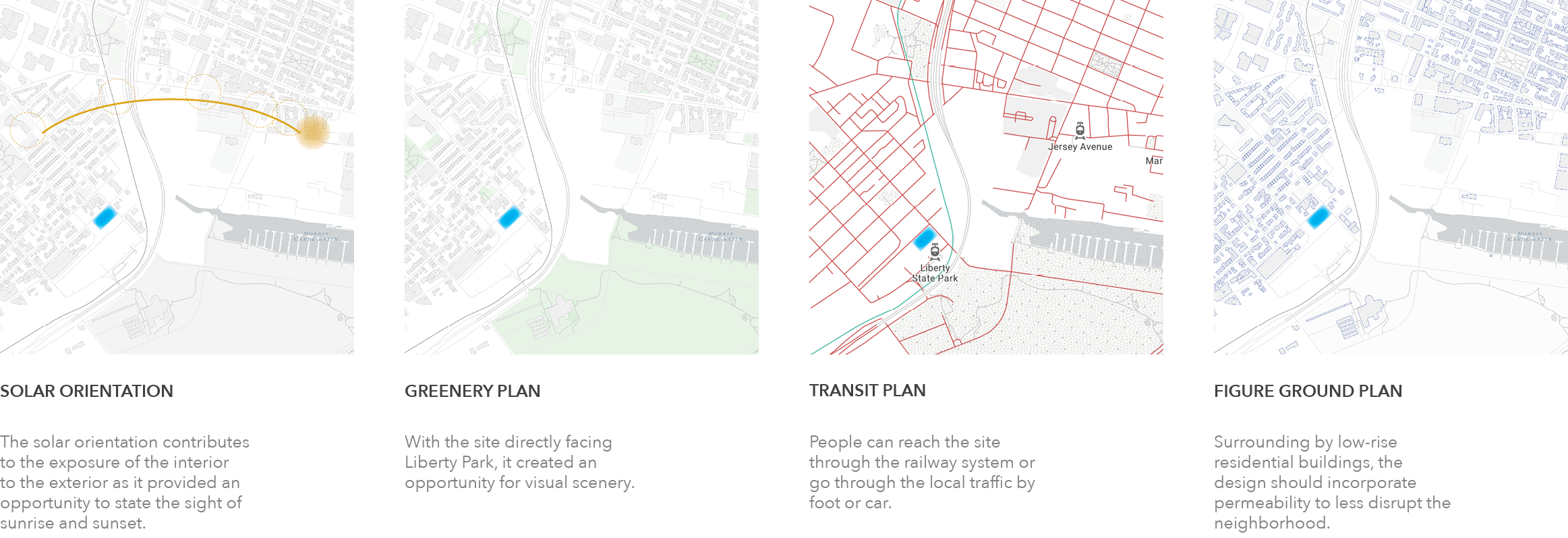
Low-rise residential buildings surround the existing Jersey City city hall site and directly face the railway station's parking lot. The development of the site emphasizes increasing pedestrian traffic. As a continuation of this concept, the ground level will dedicate to improving the quality of connectivity. The site ground creates an additional pedestrian-friendly walkway that allows residents to take shortcuts in different directions. The ability to share the use of the facing parking lot maximized the ground capacity for pedestrian movement.
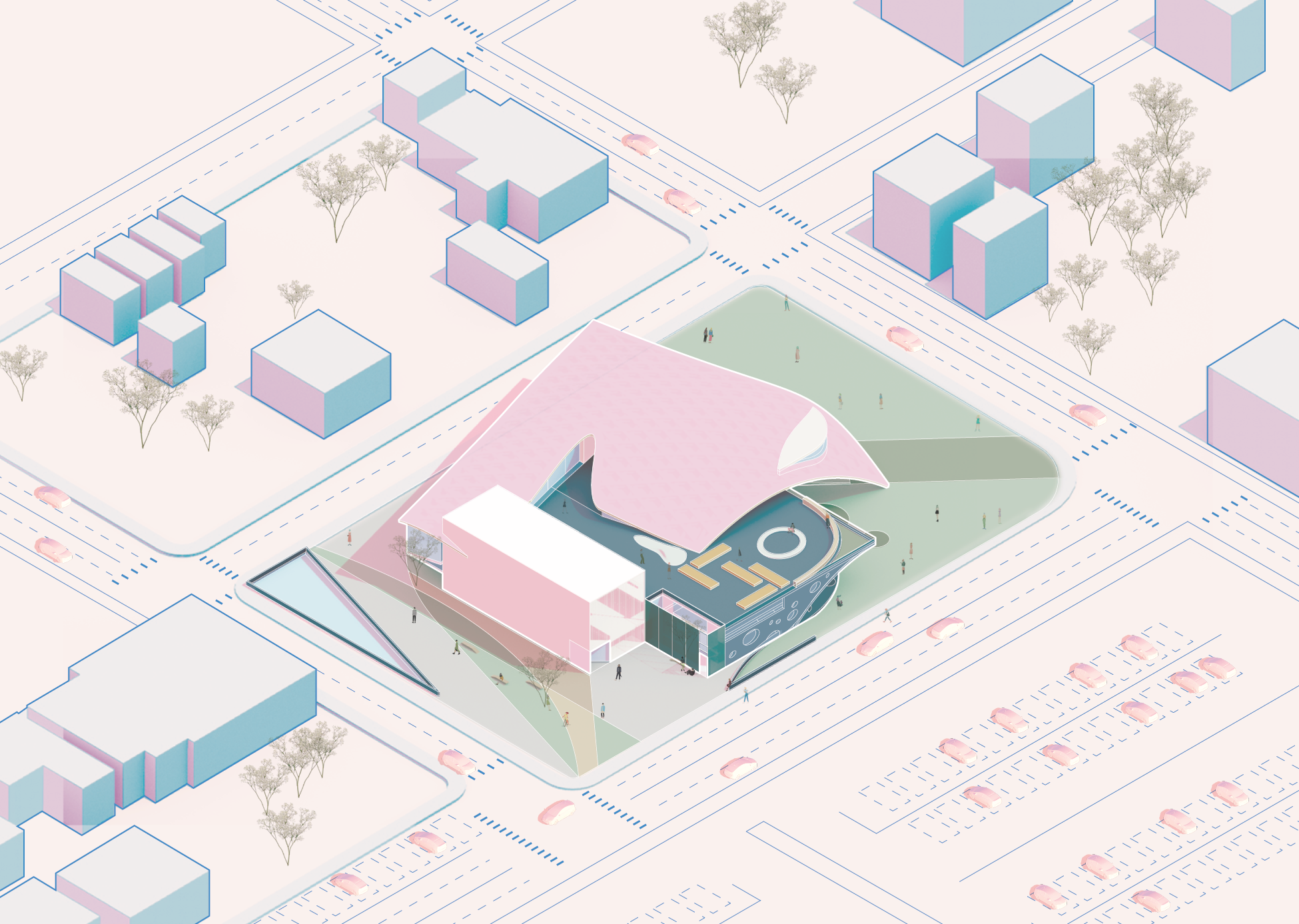
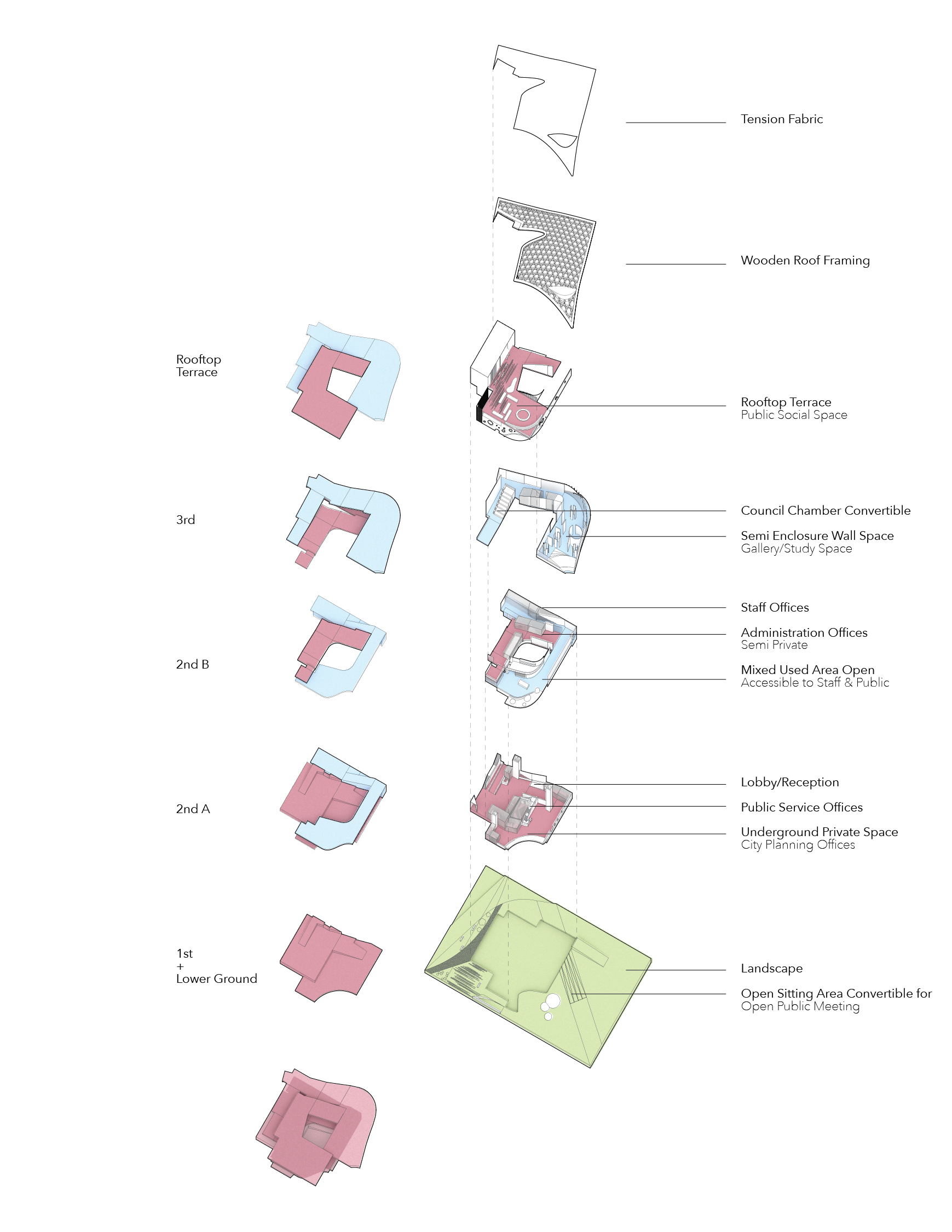
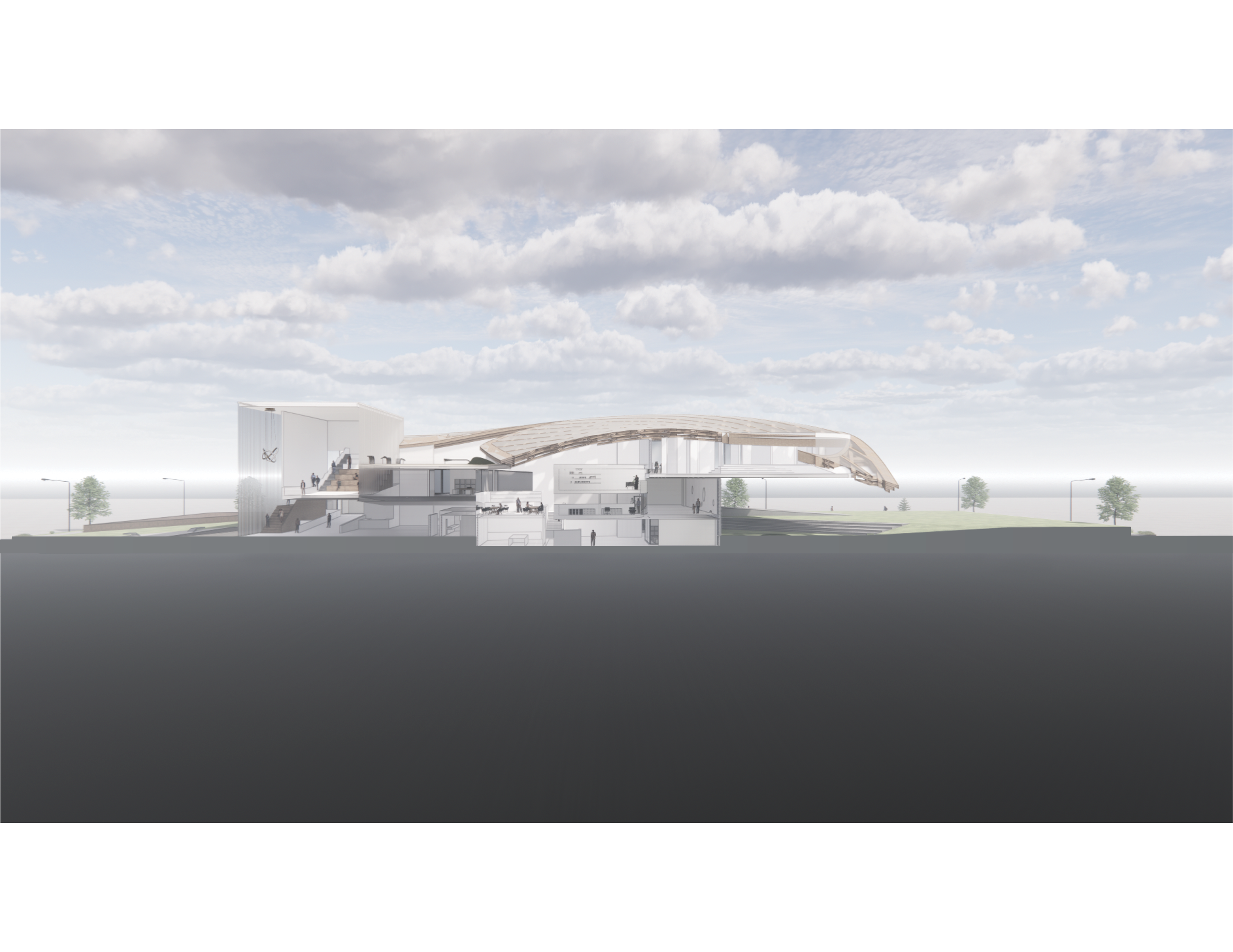
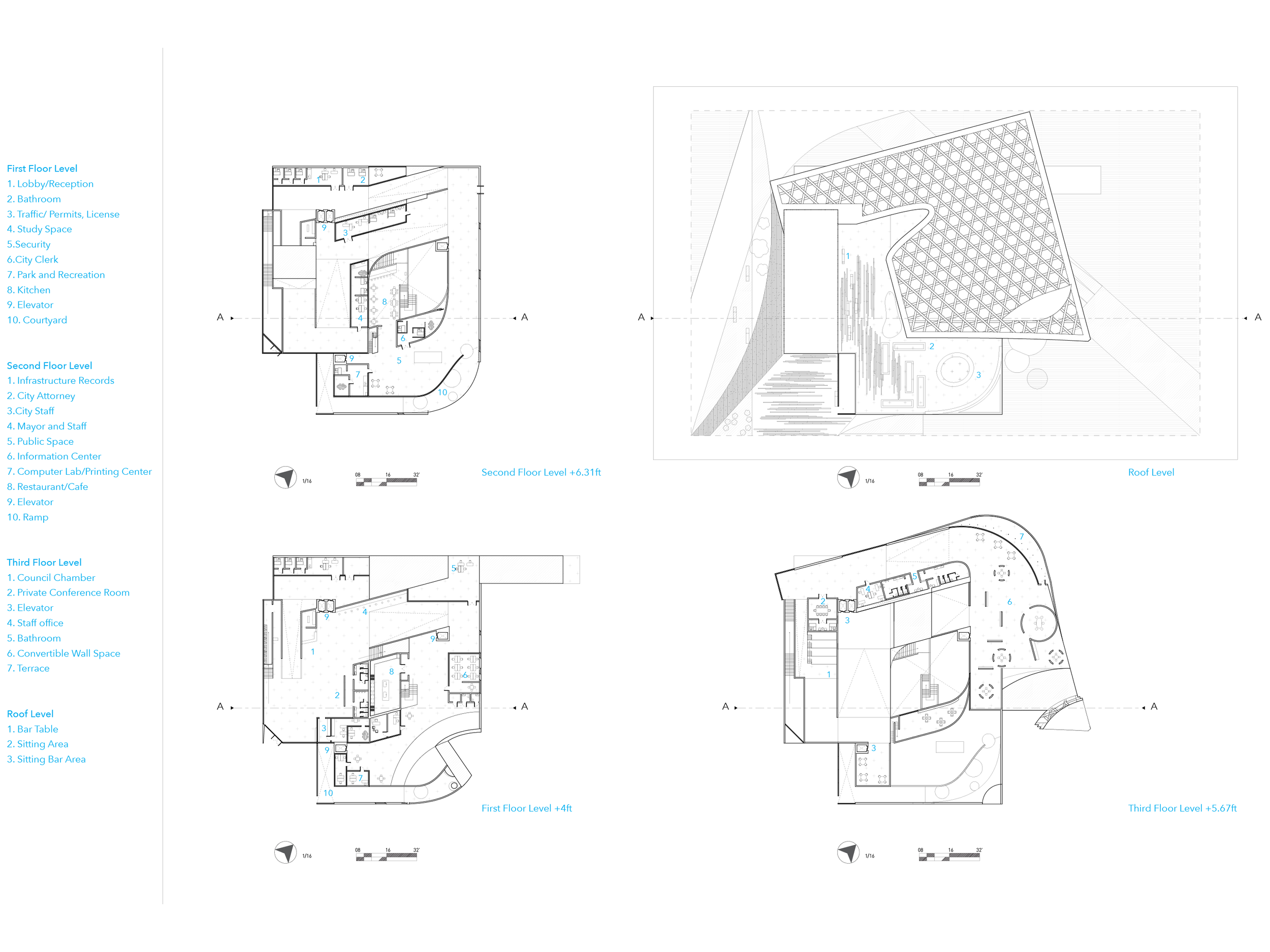
The programs are arranged based on the circulation of the continuous ramp throughout the massing. The ramp aims to facilitate a smooth transition from program to program, seamlessly blending public and administration spaces to create dynamic social interaction. In addition, the ramp also provided easy accessibility and the ability for navigation, constituting a vibe of collaboration.
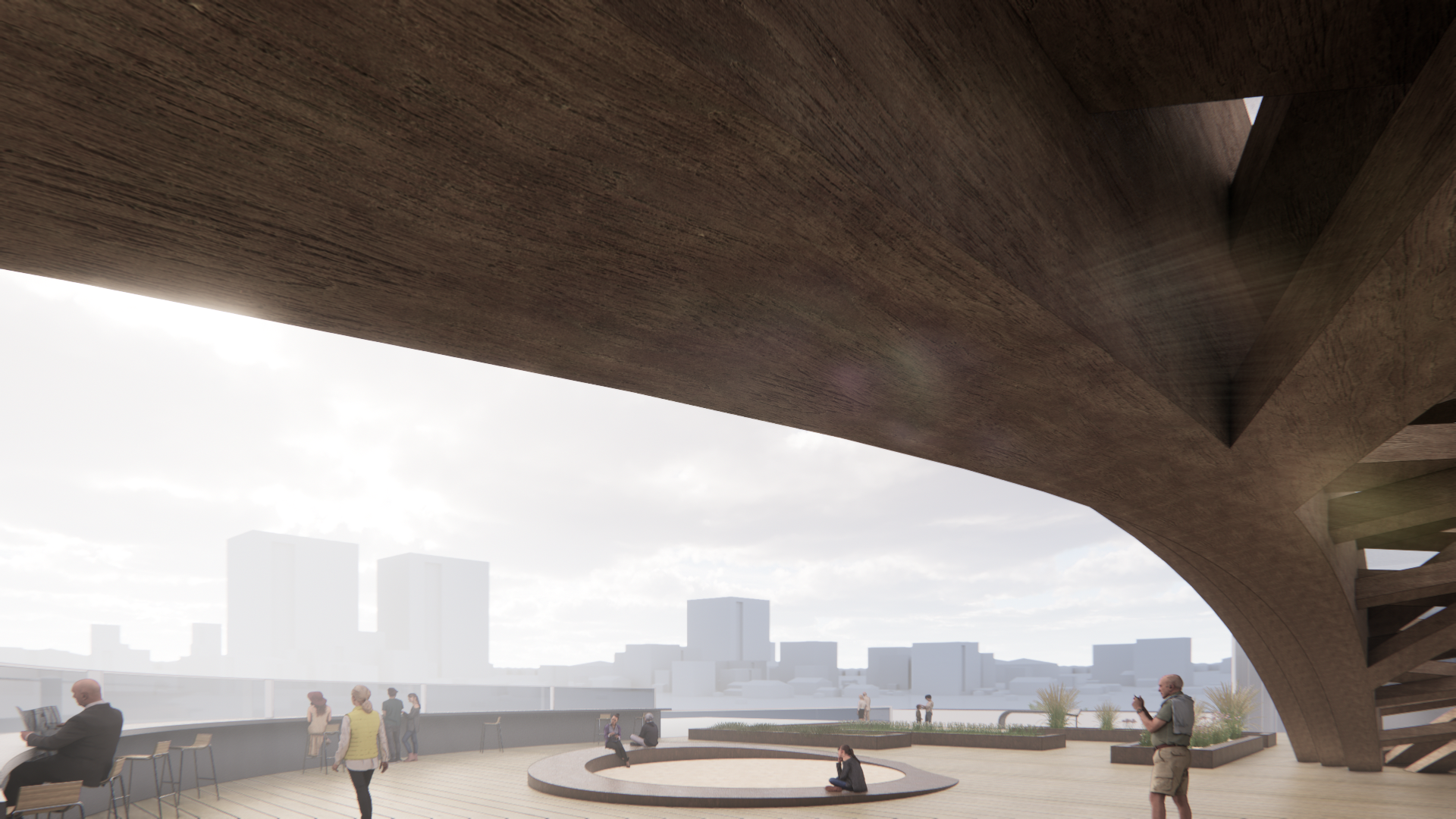
1. Rooftop terrace space that allows people to overlook the city. There are facilities installed in the area to enable more activities to happen. Due to the East facing orientation, it also allows people to view the sunrise on the deck.
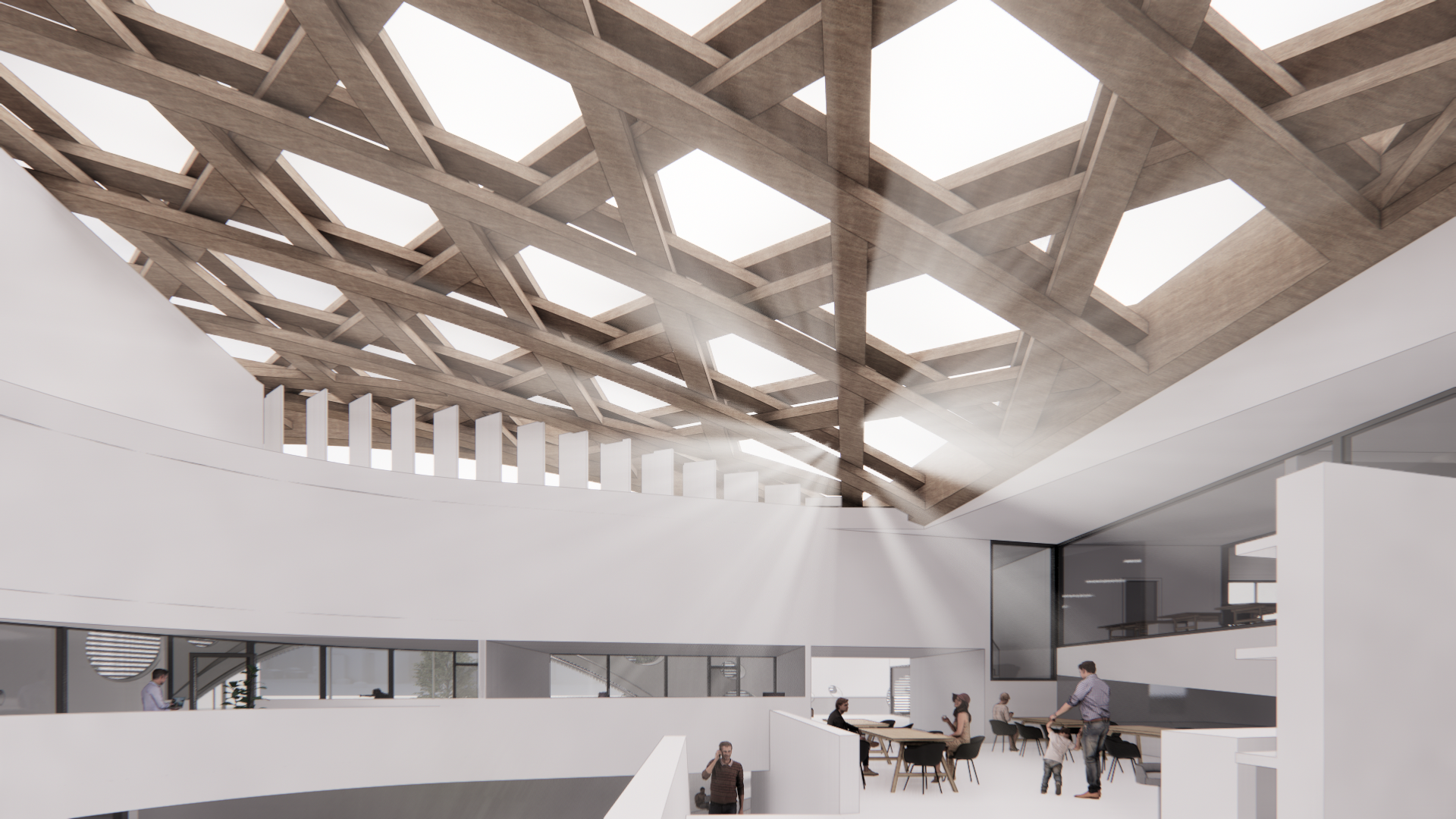
2. Atrium is the area where it gets the most natural sunlight. It's in the center of the built structure, and all other facilities are built around the atrium space to enable sufficient daylight into the room. In addition, the cafe is built on the second floor within the atrium to allow people to enjoy the open space while eating.
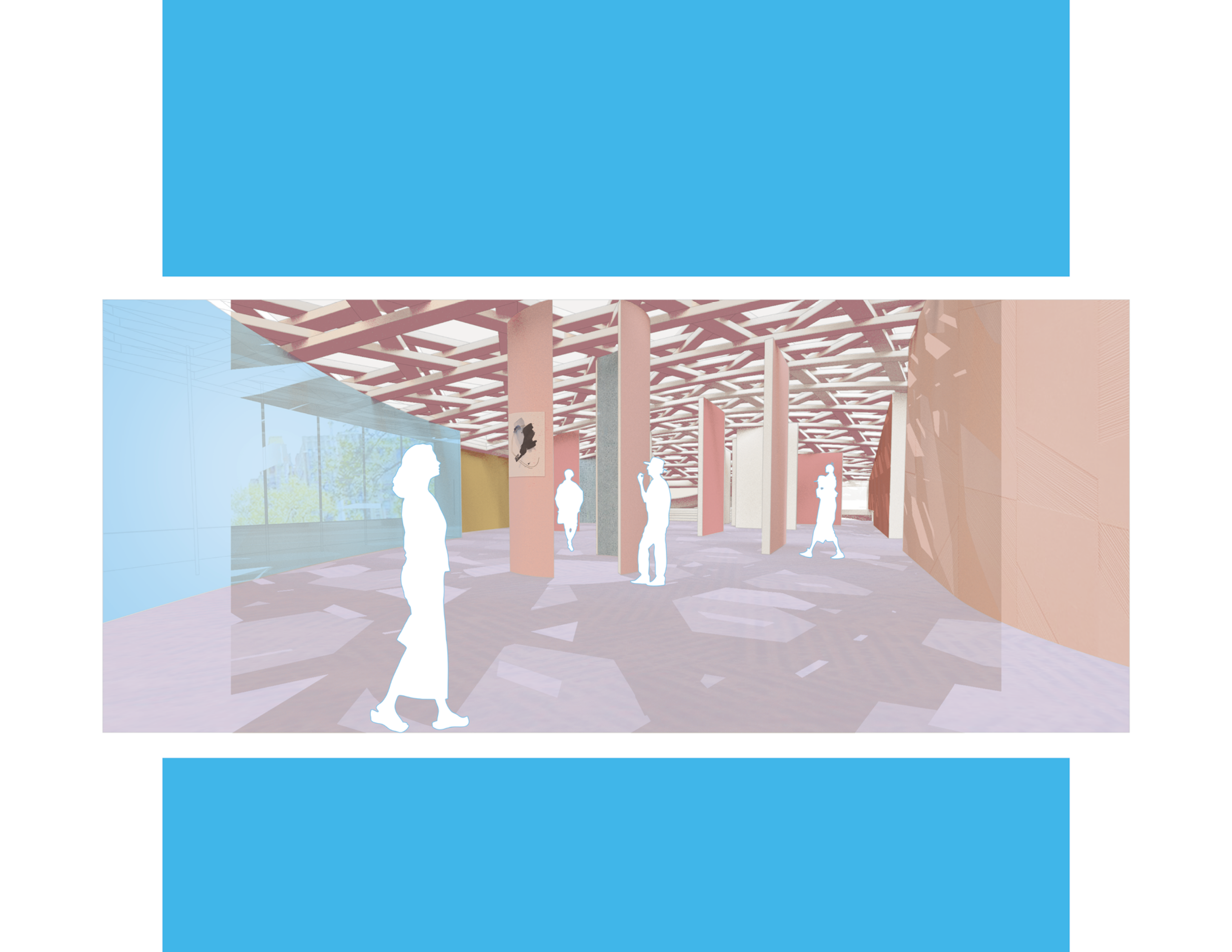
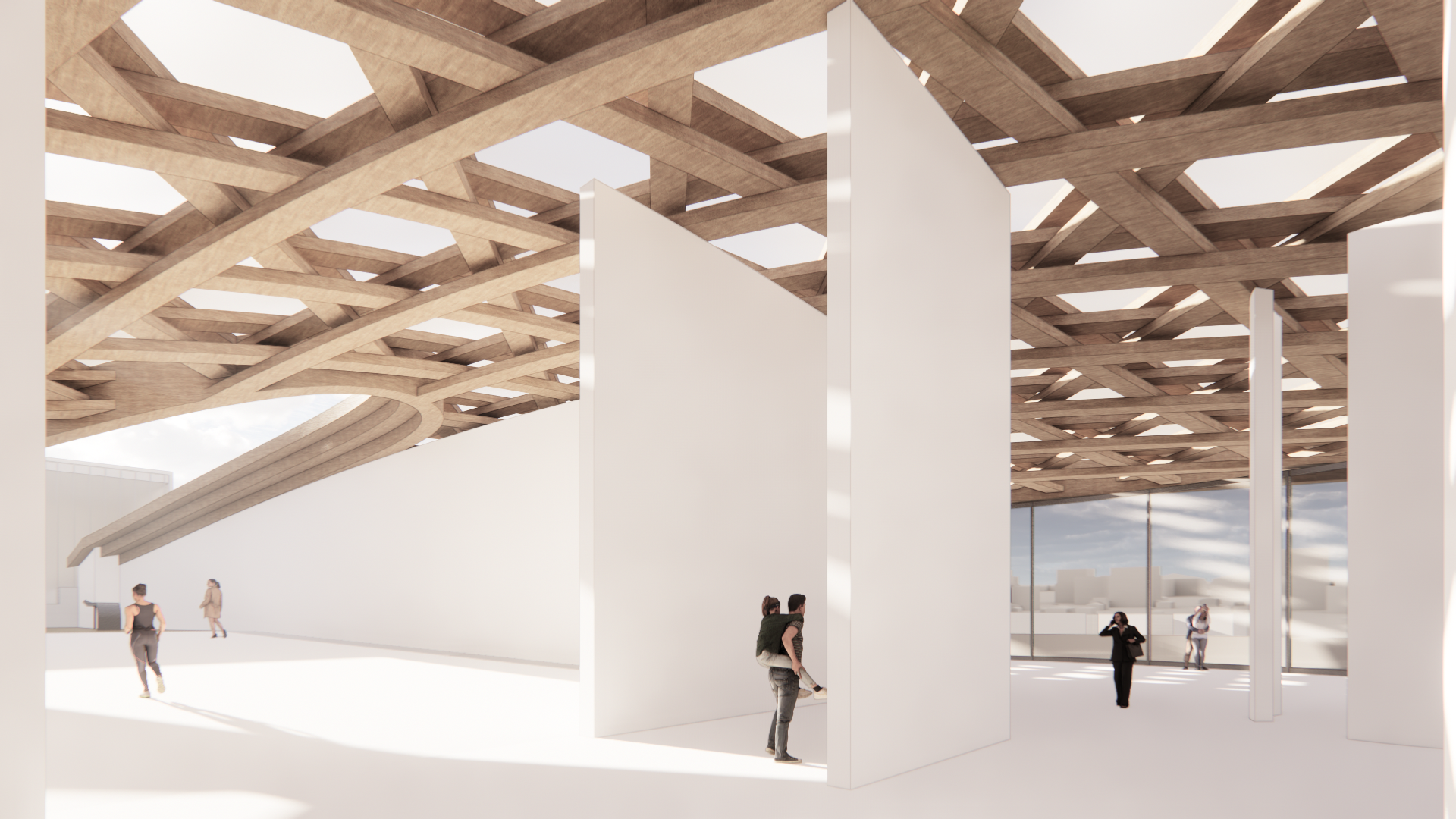
3. This is the learning center on the 3rd floor, designed for resources. In addition to the learning center, it's also seen as a gallery space. Local artists can exhibit artwork to foster the growth of creativity in the neighborhood. With the area's capacity, it can also function as an open space for different events.
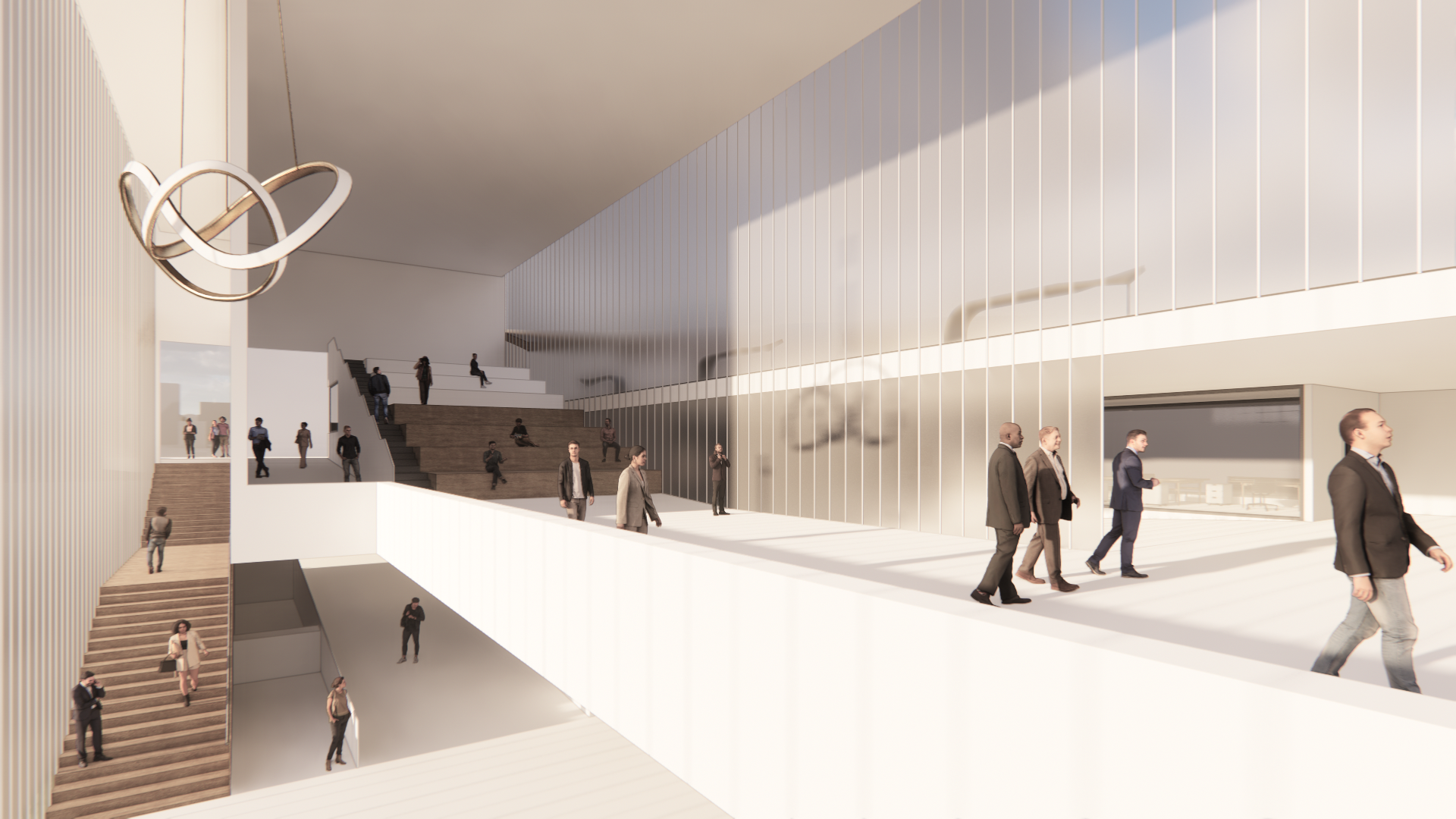
4. Indoor council meeting space is where the official city meetings are held. Open double-floor ceiling height allows maximum capacity allowance without feeling compressed. While not used, it can be a free space for people to sit and relax.
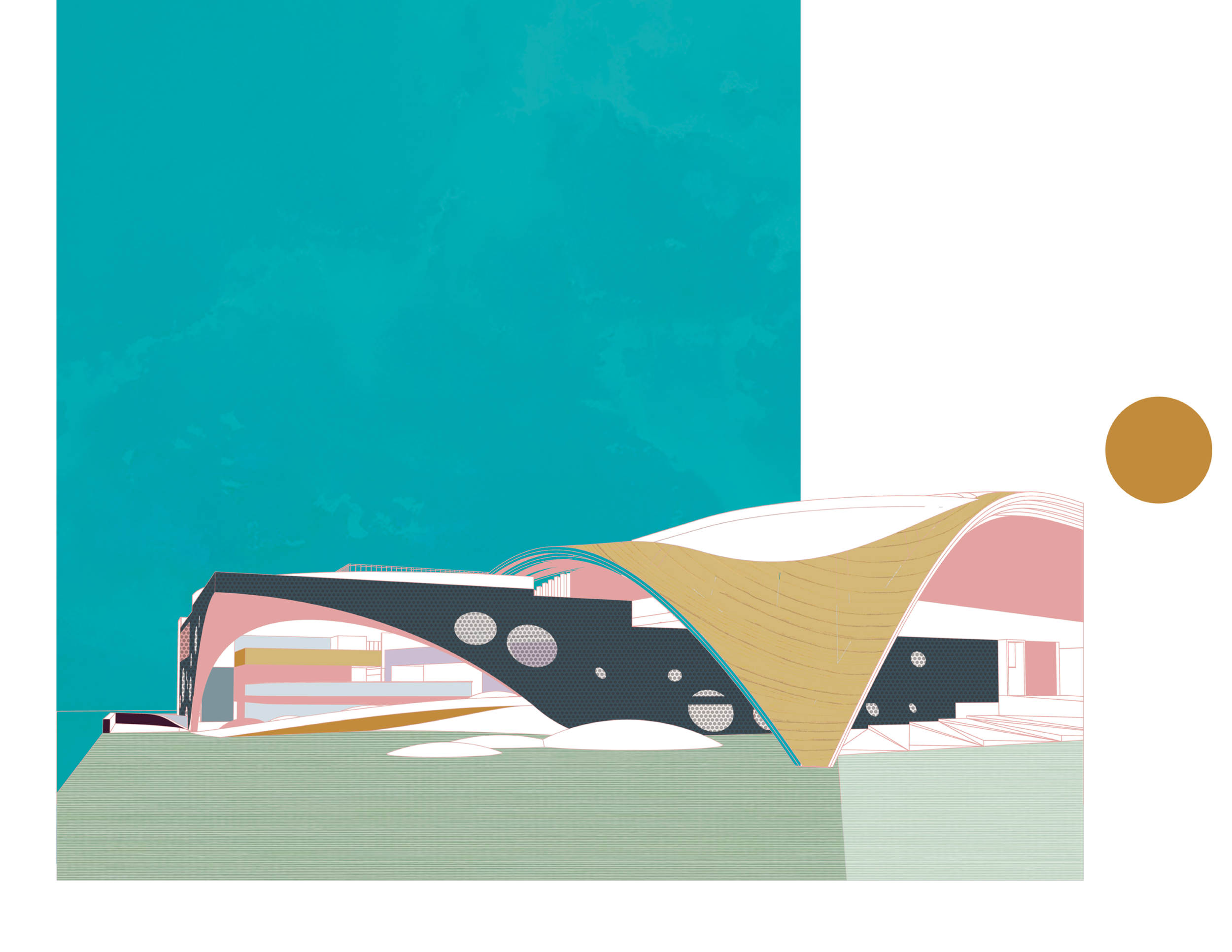
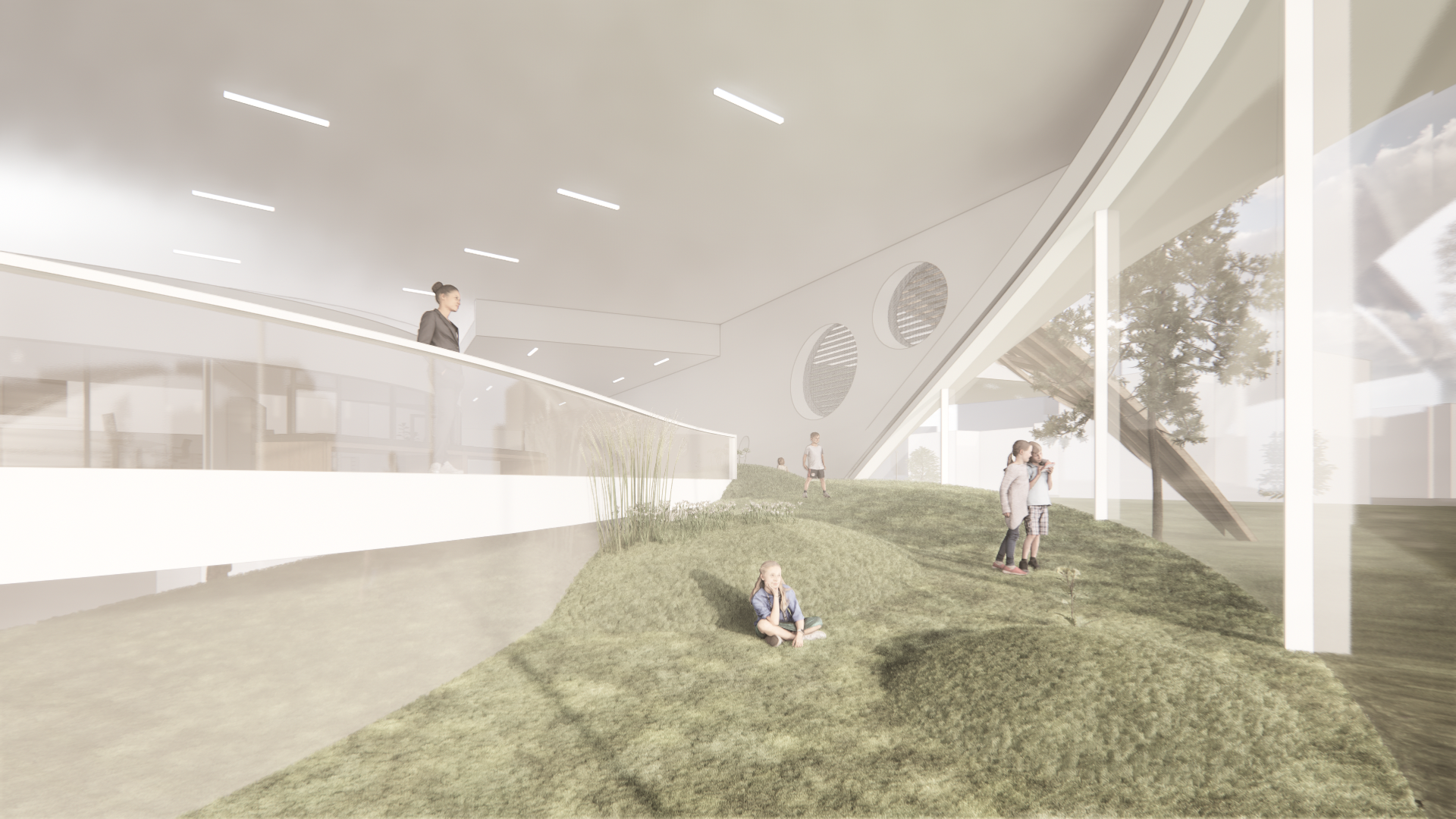
5. This is the small children's playground in front of the 2nd-floor office space. It also serves the purpose of bridging the exterior space to the 2nd floor. The curvature curtain wall shows the external view of the children's playground and outdoor council meeting space. The outdoor environment allowed a less restricted setting for the council meeting. While not in use, the area can be shifted into a shared space for public leisure. In addition, a curvilinear design window was positioned on the second and third levels facing the East side, dedicated to visual outreach to the Manhattan cityscape with the backdrop of sunrise.
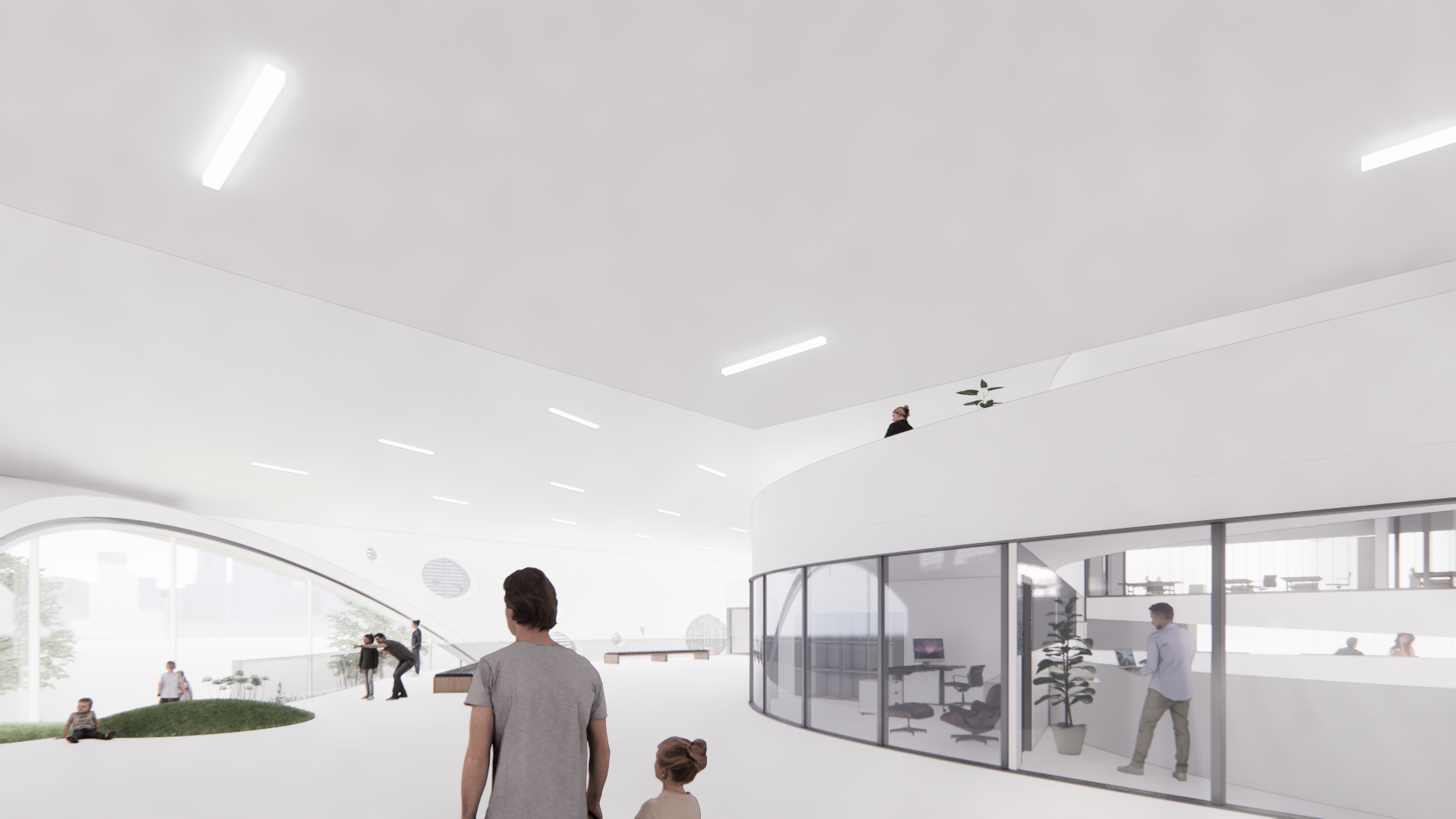
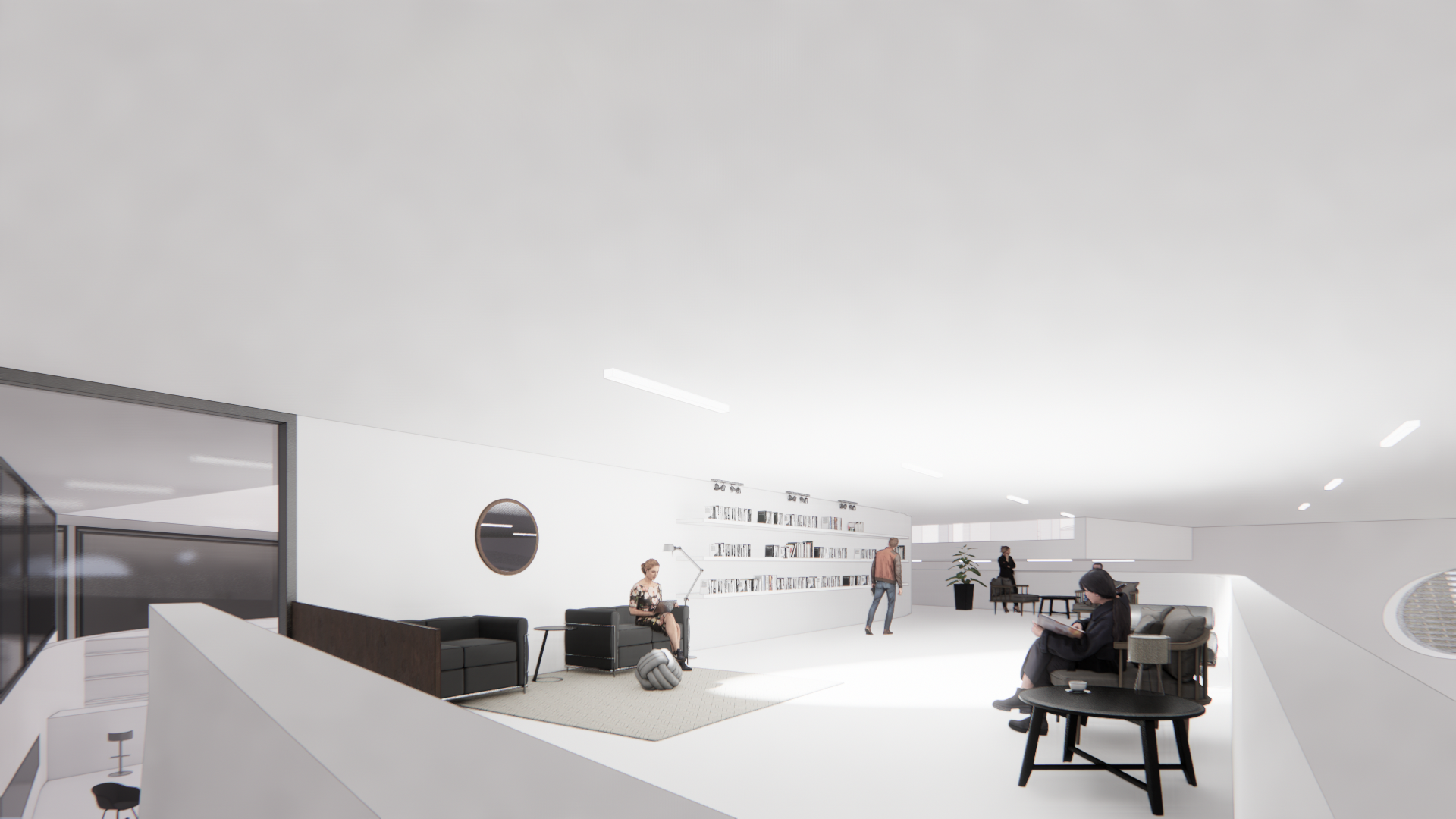
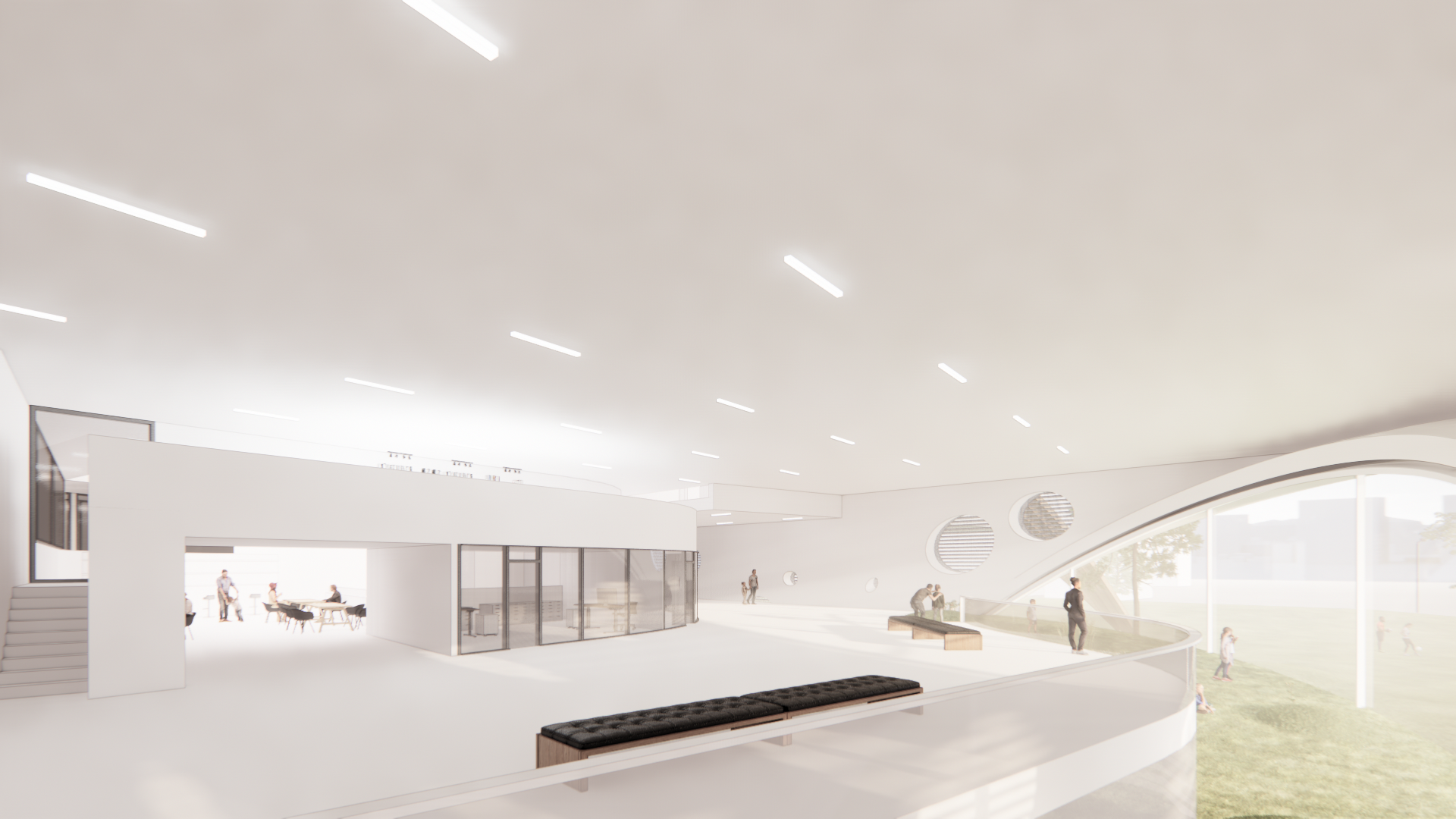
The second floor is the area where mixed use of both public spaces and official administration offices. On this floor, people will find the cafe in the atrium space, the book corner, which is located on top of the administration offices, the children’s playground connecting the ground floor to the second floor, and the general seating area in front of the offices.
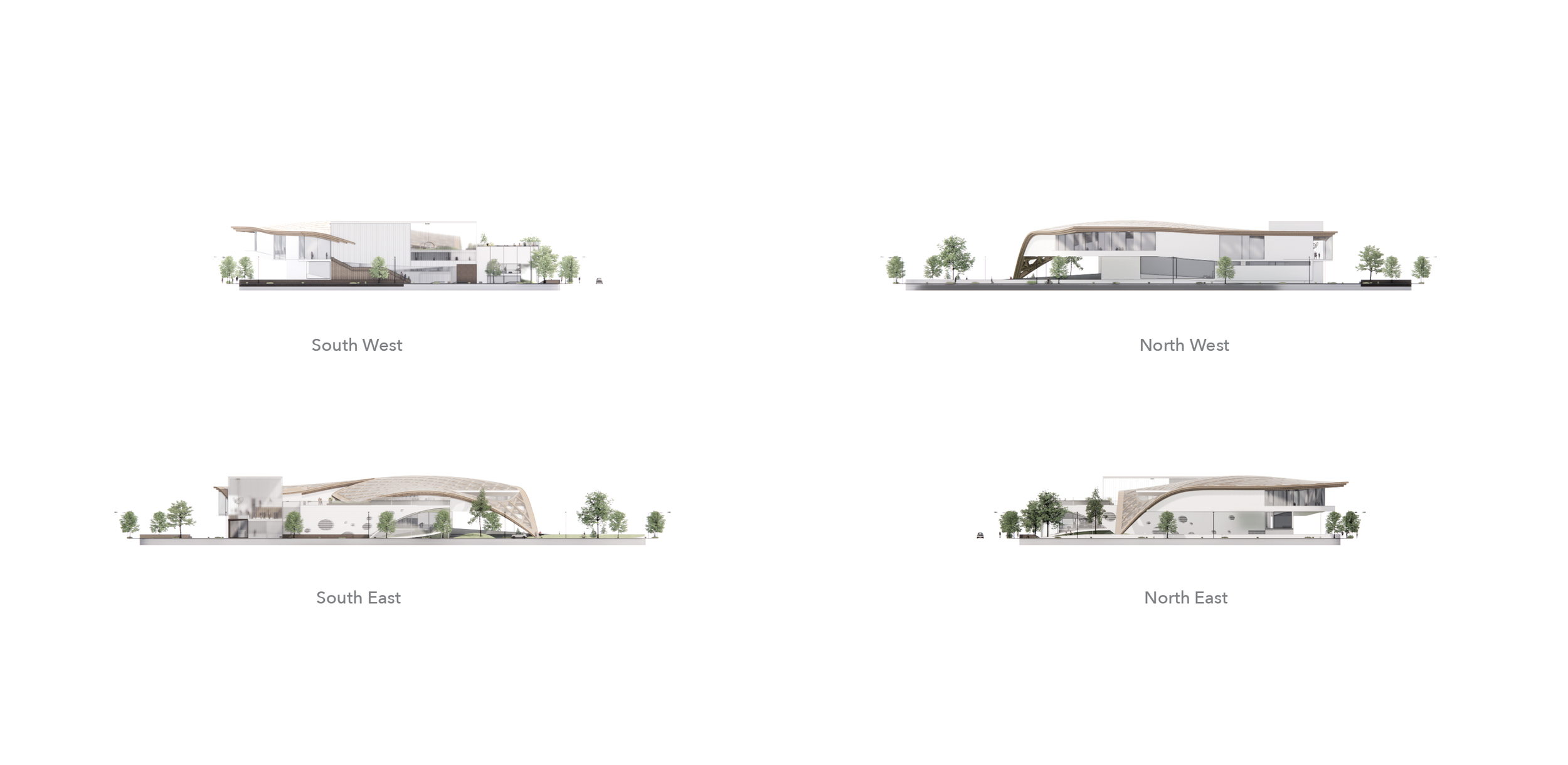
After entering the city hall, offices for general public service will be nearby the entrance, providing easy access to in and out service. Then, people will see the double-ceiling staircase leading directly to the council meeting space on the second floor. Alternatively, people can move down to the lower ground level where the restaurant kitchen’s location and the administration offices for city planning require partial privacy. The council meeting space on the 2nd floor is next to the council members’ offices to encourage spatial continuity to maintain a connection between residents and city officials. The learning center is on the 3rd floor, directly connected to the rooftop terrace. The learning center, as the space underneath the canopy structure, is dedicated to multi-functional usage. The movable semi-enclosure wall inside the room provided an occupiable private study area. In addition, this space can also be converted into a gallery space to exhibit artwork of local artists or other important events. The 3rd floor also created a spectacular aperture for people looking at the Manhattan cityscape. The rooftop terrace encourages dynamic social events. High tables and a fire pit ring are added for conversation and interaction. Greenery is planted to include visual separation and visual abstraction. An atrium and the canopy structure maximized permeability, transforming the interior space into more thorough and even lighting.